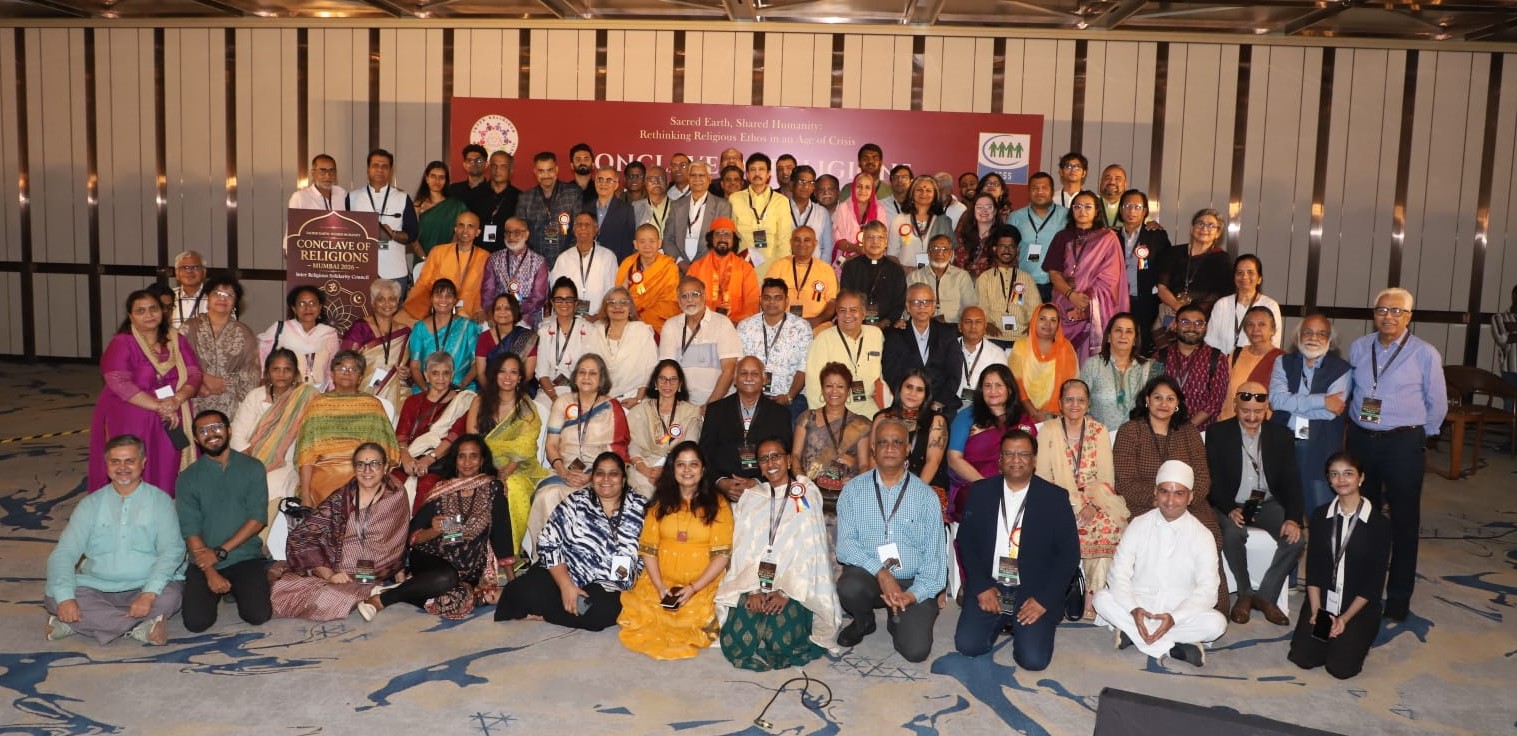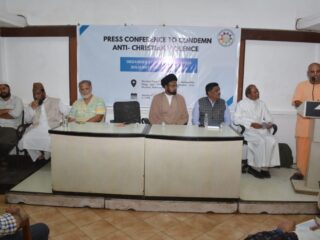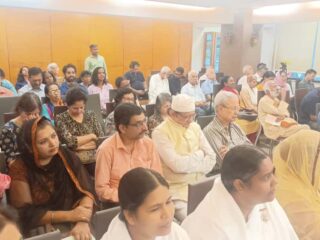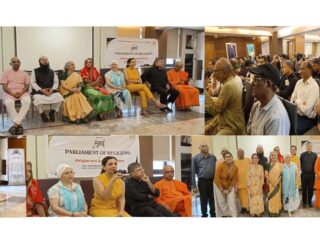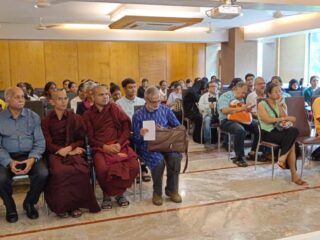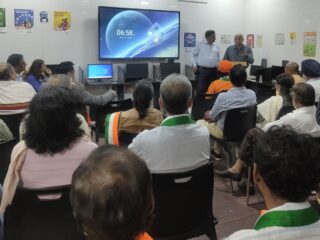
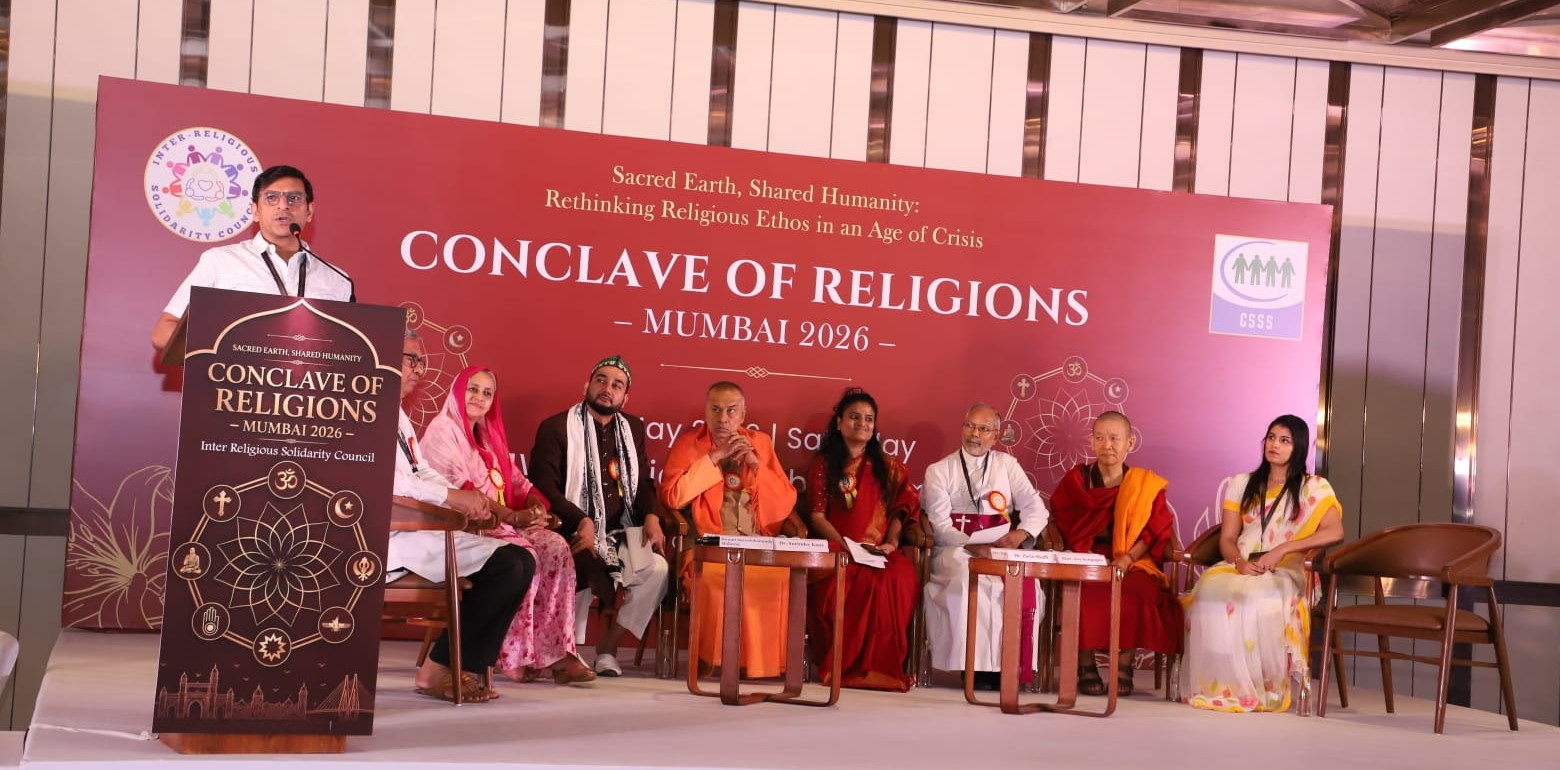
Mumbai, May 9, 2026: Religious leaders, scholars, artists, civil society members, and practitioners from diverse traditions gathered at the Conclave of Religions 2026 held in Mumbai on May 9 under the theme “Sacred Earth, Shared Humanity: Rethinking Religious Et hos in an Age of Crisis.” The event was organised by the Inter-Religious Solidarity Council (IRSC), Mumbai, and brought together participants from across faiths to reflect on religious extremism, social fragmentation, and ecological responsibility.
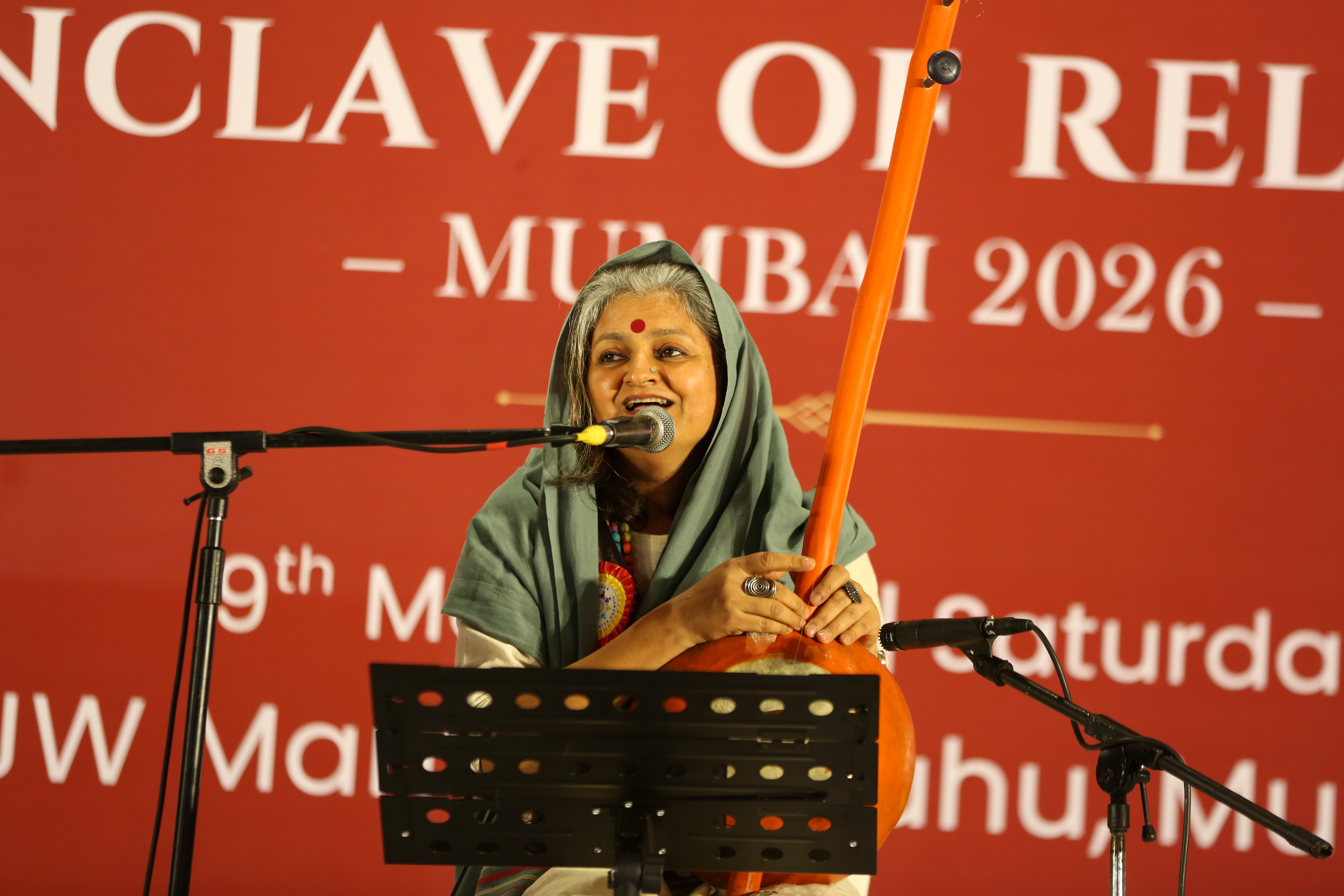
The Conclave opened with an interfaith invocation by Radhika Sood Nayak, who rendered Begumpura by the 15th-century Bhakti saint Ravidas – a poetic vision of a society free from suffering, hierarchy, and fear – setting the tone for the gathering’s emphasis on dignity, coexistence, and justice.
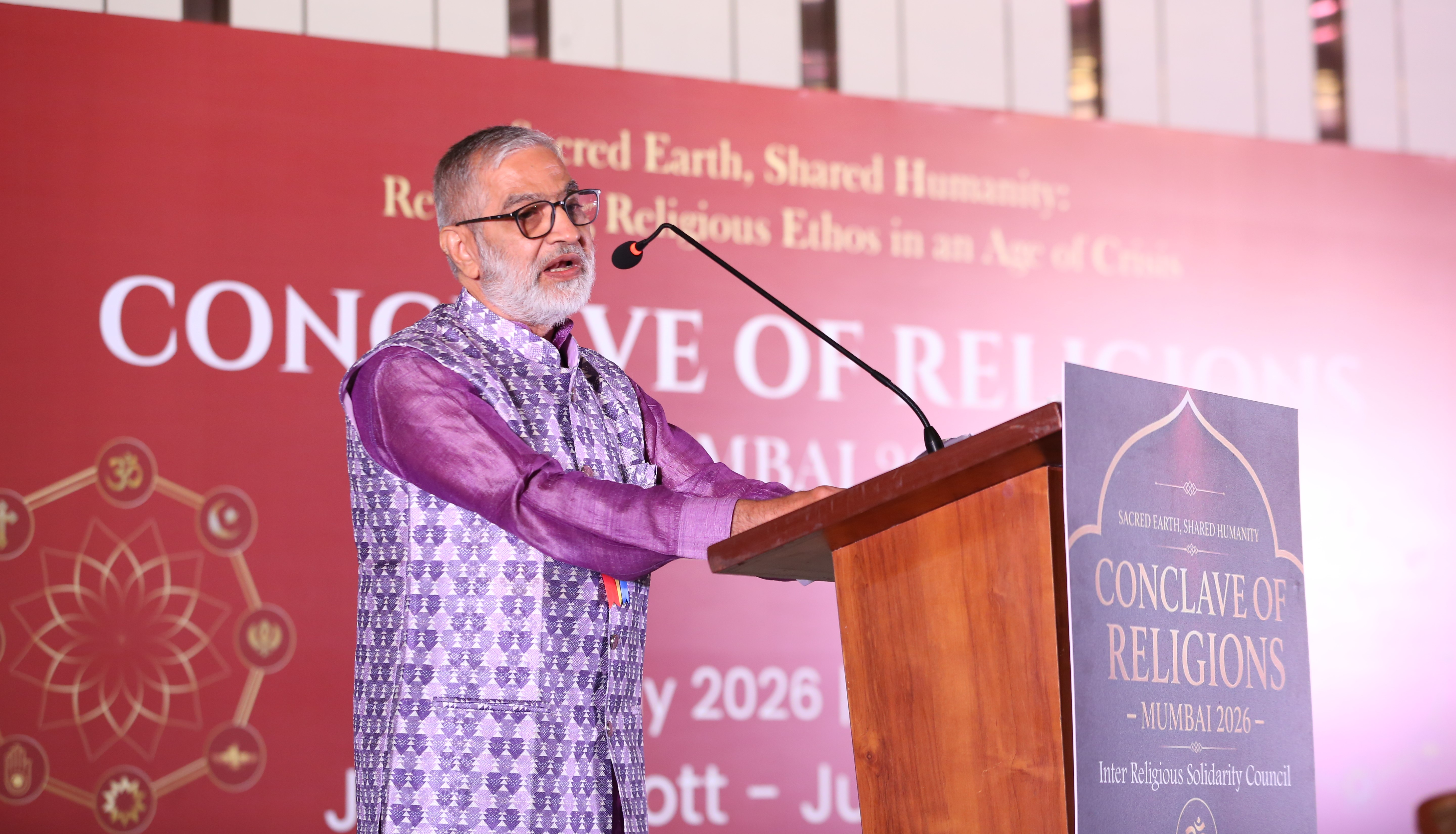
Welcoming participants, IRSC Convenor Keshav Chandra Das reflected on the origins of the Inter-Religious Solidarity Council, established in 2022 to foster interreligious harmony through dialogue, shared celebrations, and collaborative engagement in increasingly polarised times. Referring to the theme of the Conclave, he framed the ethical choices before society today as “division or dialogue, exploitation or stewardship.”
Irfan Engineer, Co-Convenor of IRSC and Director of the Centre for Study of Society and Secularism (CSSS), situated the Conclave within India’s pluralistic traditions. Referring to Swami Vivekananda and Mahatma Gandhi, he emphasised the importance of recognising the dignity and truth present across religions. “India is home to the religion with the smallest number of followers in the world, as it is home to some major religions as well,” he observed.
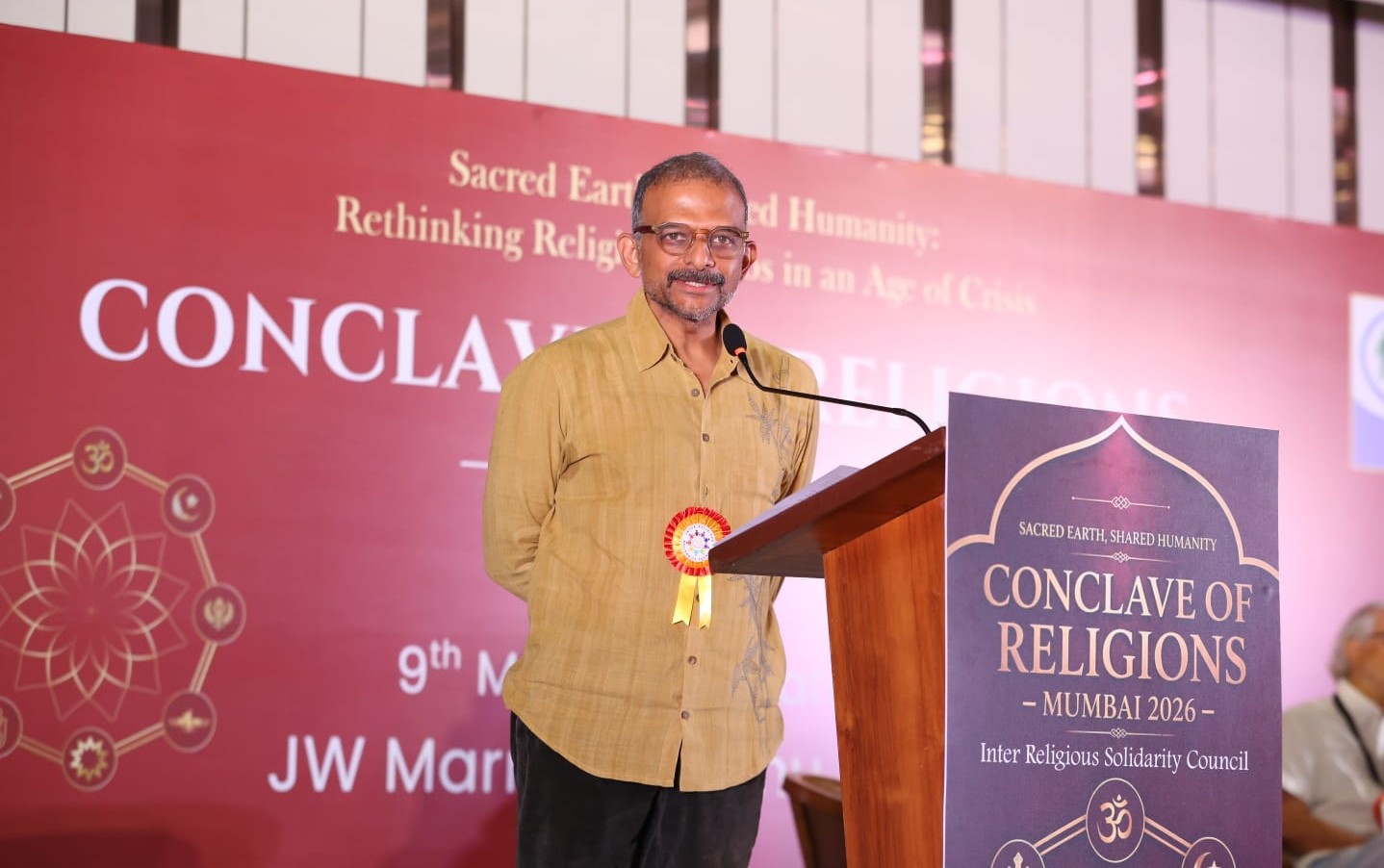
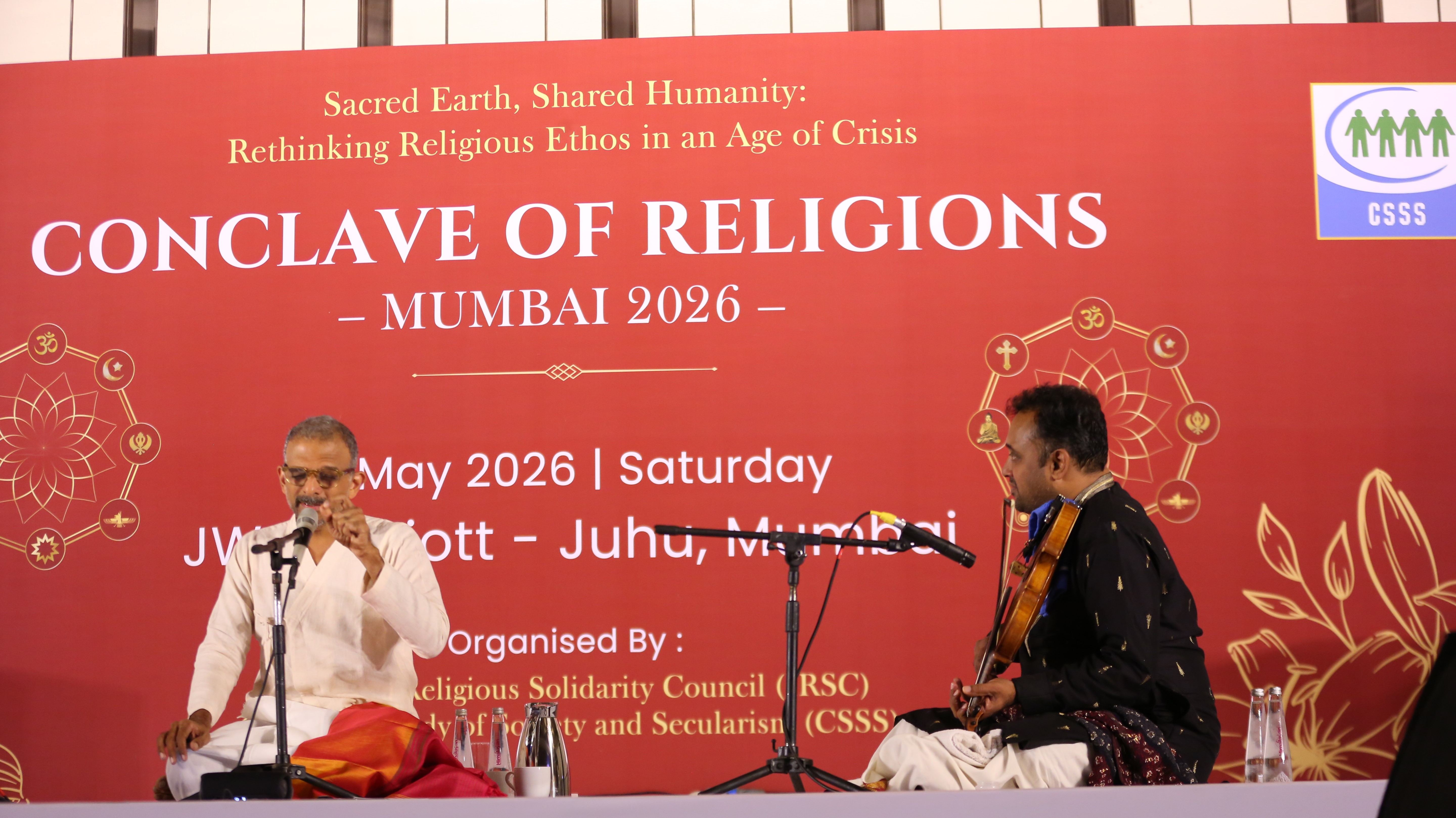
The keynote address was delivered by noted vocalist and Ramon Magsaysay Award recipient T. M. Krishna, who reflected on religion, identity, nationalism, social justice, and ecological responsibility through history, music, and constitutional thought. Beginning with references to Rabindranath Tagore’s Jana Gana Mana and early debates around the Indian flag and the Constitution, he explored the layered and evolving imagination of India.
Speaking candidly about contemporary anxieties, he remarked, “We have a crisis of fear, a crisis of hate.” Reflecting on symbols and belonging, he observed that colours themselves had become “triggers” in public discourse, while also reminding the audience that “the green denoting Islam was really about environmentalism.”
Krishna also reflected on the ethical dimensions of religion and nonviolence. “Subscribing to ahimsa does not mean we stop being violent,” he said, urging participants to examine violence in everyday relationships and language. Emphasising the inseparability of ecological and social questions, he stated, “You can’t be working for the environment without working for social justice. We are the environment, not separate from it.”
Drawing from Buddhist emperor Ashoka’s reflections on dhamma and invoking Dr B.R. Ambedkar’s use of the term maitri (friendship or compassionate fellowship), Krishna suggested that ethical coexistence required listening across differences. “Every human being has a right to engage in every dialogue,” he noted, adding that “atheism is also a kind of dharma.”
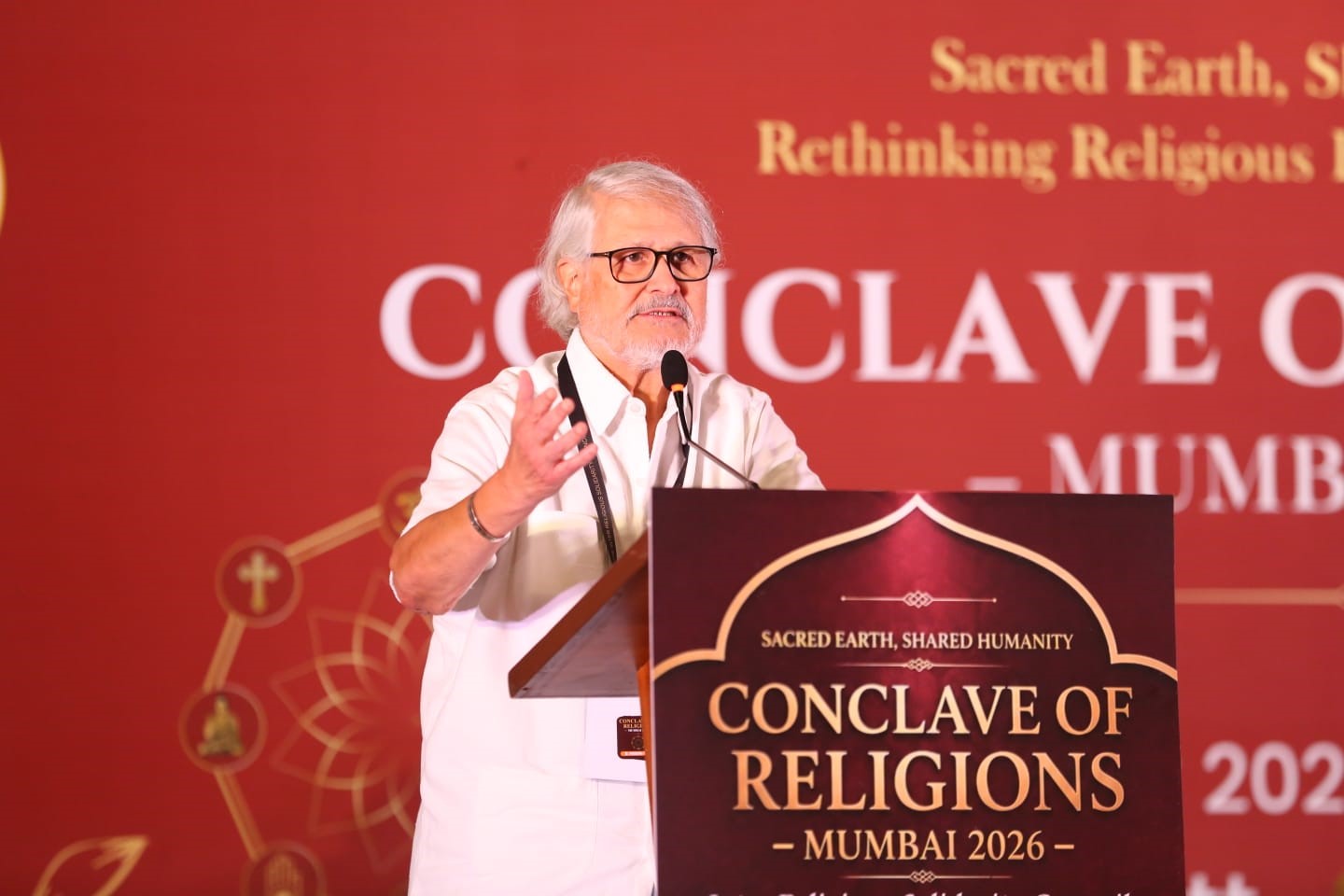
Former Lieutenant Governor of Delhi Najeeb Jung, who chaired the keynote session, spoke about the idea of parasparta – mutuality or interdependence – in relation to constitutional thought and social life. “This Conclave is necessary to bring us back to our earth and to our humanity,” he said. Warning against sectarianism and bigotry, he asked, “Can we refuse to hate in the name of what is sacred? Let our faith be reflected in how we treat each other.”
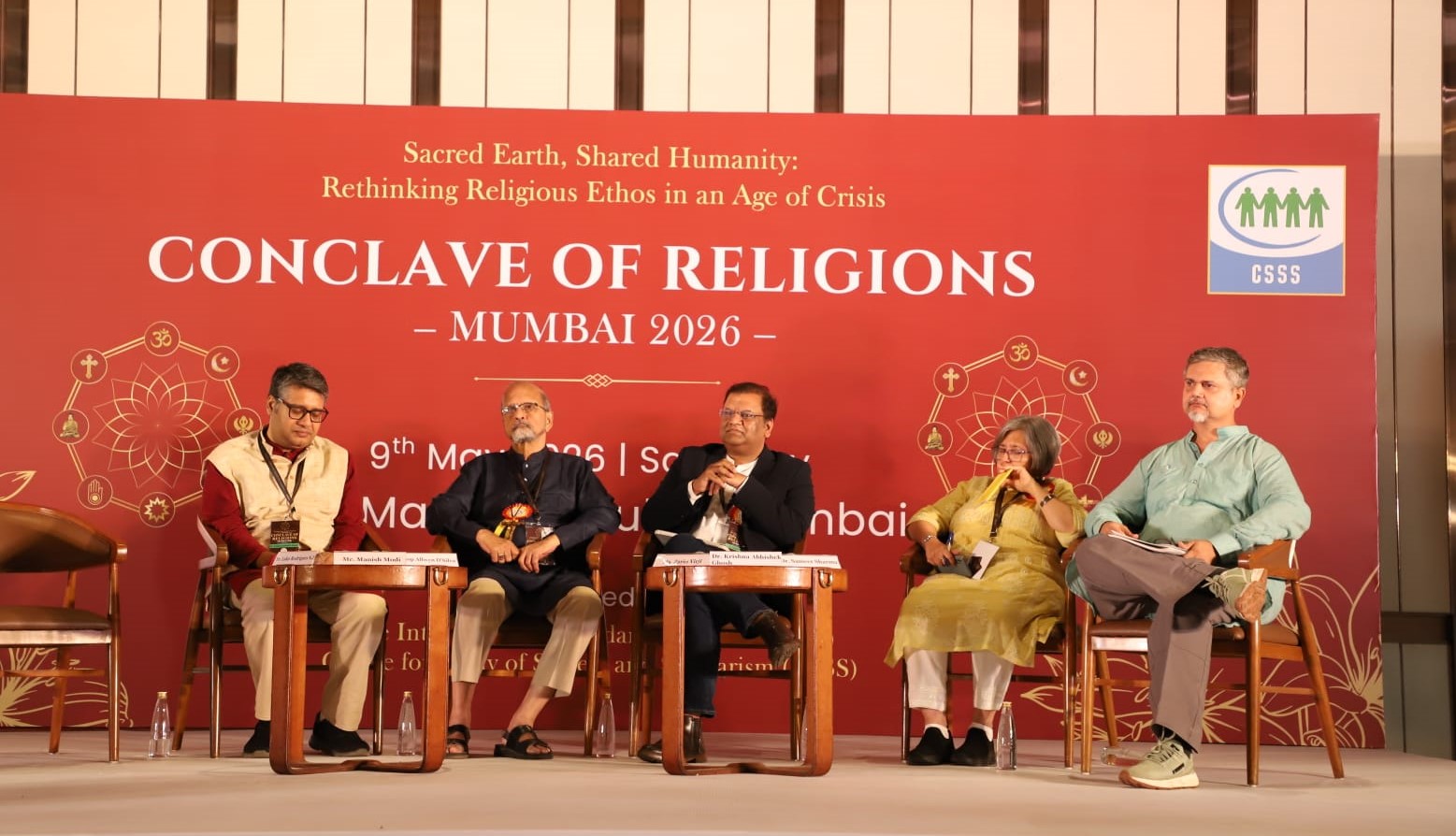
The first panel, “Bridges of Belief: Healing Divides,” moderated by Fr. Frazer Mascarenhas, brought together representatives from multiple traditions, including Christianity, Hinduism, Islam, Sikhism, Buddhism, and the Warkari tradition.
The speakers repeatedly returned to themes of compassion, transformation, and interconnectedness. Bishop Dominic Savio stated, “The essence of Christianity can be expressed in just one word: love.” Swami Sarvalokananda Maharaj recalled Swami Vivekananda’s call to “accept all religions as true.” Haji Sayed Ambar Chisty observed, “Islam does not teach us to divide; Islam teaches us to connect.”
Tejashree Ingawale reflected on the Warkari practice of greeting others with “Mauli Mauli,” explaining that it emerges from seeing divinity in every human being. Dr Surinder Kaur drew from Guru Nanak’s teachings to affirm the unity of humanity, while Ven. Geshe Tenzin Damchoe emphasised that “our dhamma is transformation of our mind.”
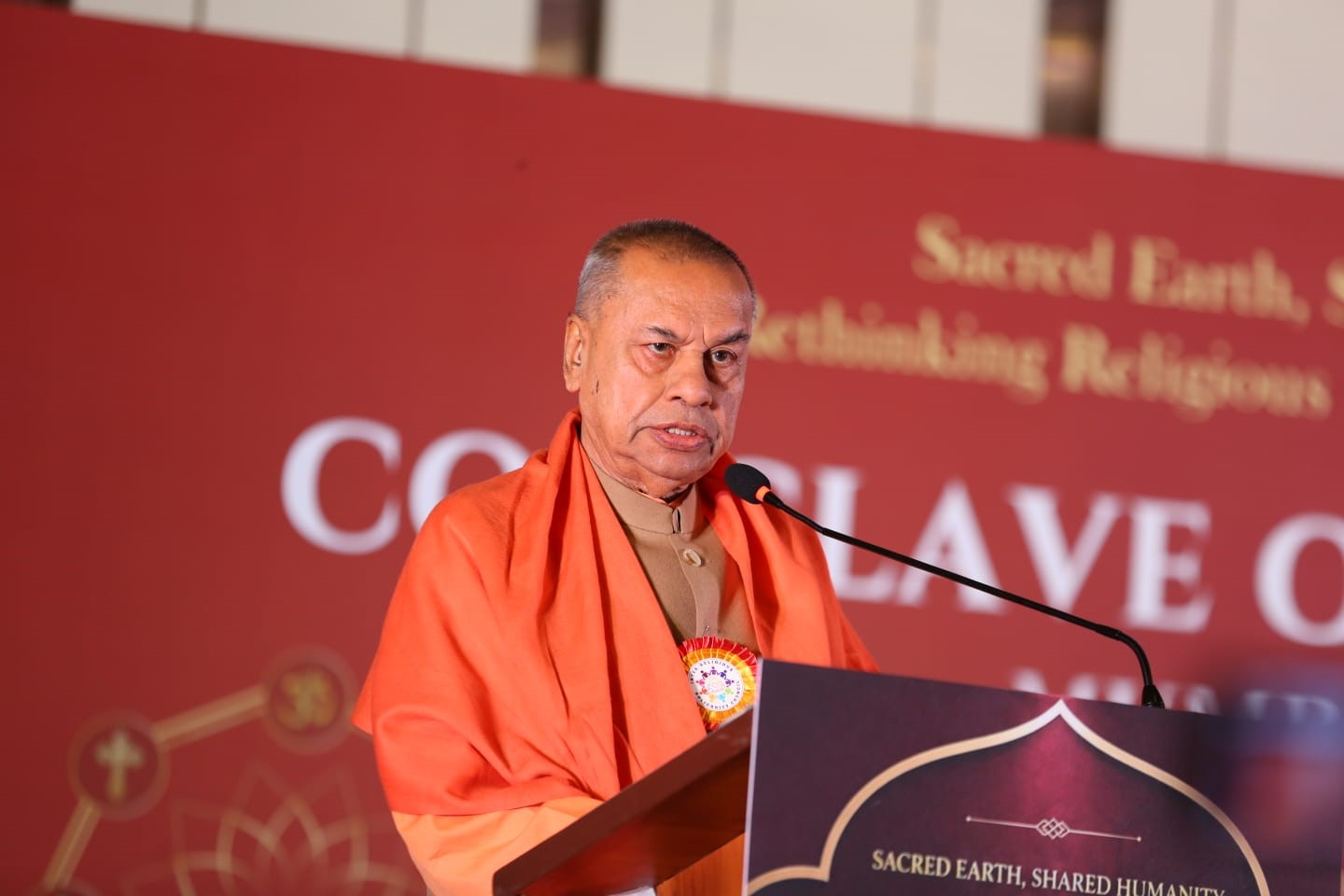
Audience reflections raised questions around coercion, politicisation of religion, and the need to uphold the right of all religions to exist peacefully. Responding from a civil society perspective, actor Joy Sengupta remarked, “Politicians weaponise religious prejudice, not religion per se,” adding that compassion and service cannot themselves be weaponised. Scholar Dr Zarin Shafi observed, “We have to be the bridge. All religions focus on the purpose of humanity.”
The session concluded with Tejashree Ingawale presenting devotional songs from the saint-poet traditions of Maharashtra.
The second half of the Conclave focused on ecological responsibility through the panel “Stewards of the Earth: A Multifaith Call to Eco-Centrism,” followed by a reflective structured dialogue process that invited participants to reflect on actionable commitments emerging from the day’s conversations.
The Conclave concluded with a cultural evening featuring Carnatic music by TM Krishna and accompanying artistes, reaffirming the role of culture and the arts in nurturing dialogue, reflection, and solidarity across communities.