5/9/2026
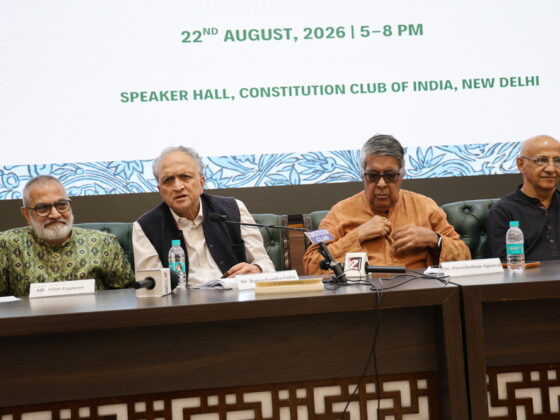
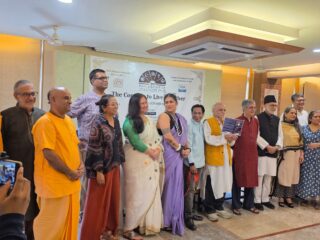
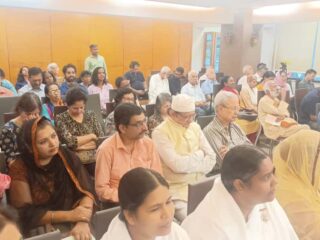
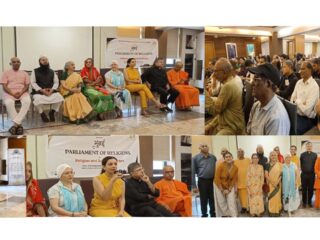
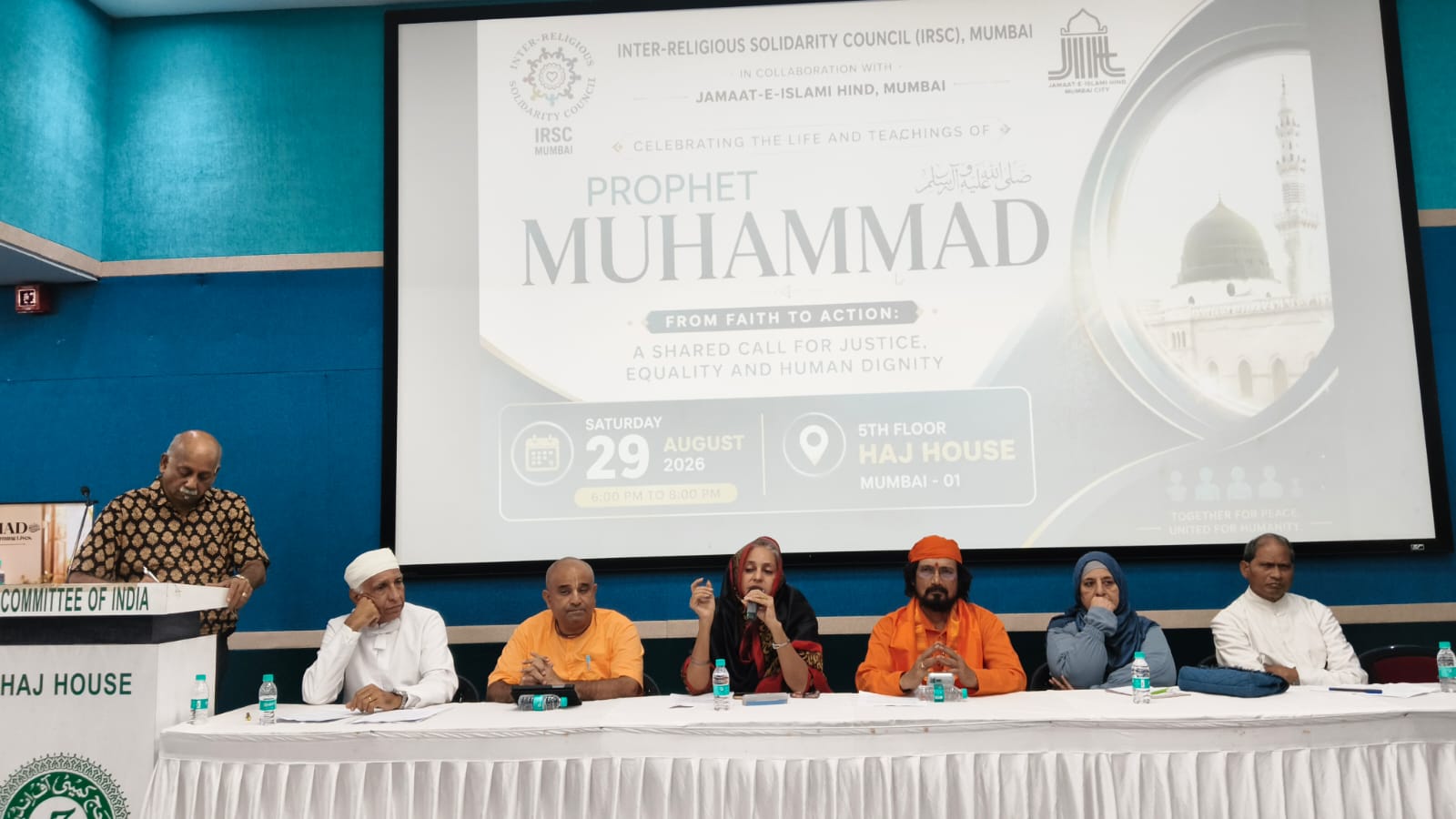
The program was organized by Inter Religious Solidarity Council (IRSC) (29/08/2026) in association with Jamaat-e-Islami Hind with the theme “From Faith to Action: A Shared Call for Justice, Equality and Human Dignity.” The program featured speakers and representatives from different religious traditions for an interfaith discussion on justice, equality and human dignity.
The programme was significant in the context of the prev ailing negativity and misconceptions surrounding Islam and its history. At a time when Islamophobia often shapes public perceptions of Islam and Muslims, the programme created a space where people belonging to different faith traditions came together to engage with the life and teachings of Prophet Muhammad. Significantly, representatives and religious leaders from faith traditions other than Islam also participated in the discussion and reflected on the Prophet’s teachings and contributions to justice, compassion, equality and human dignity.
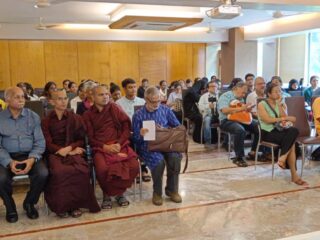
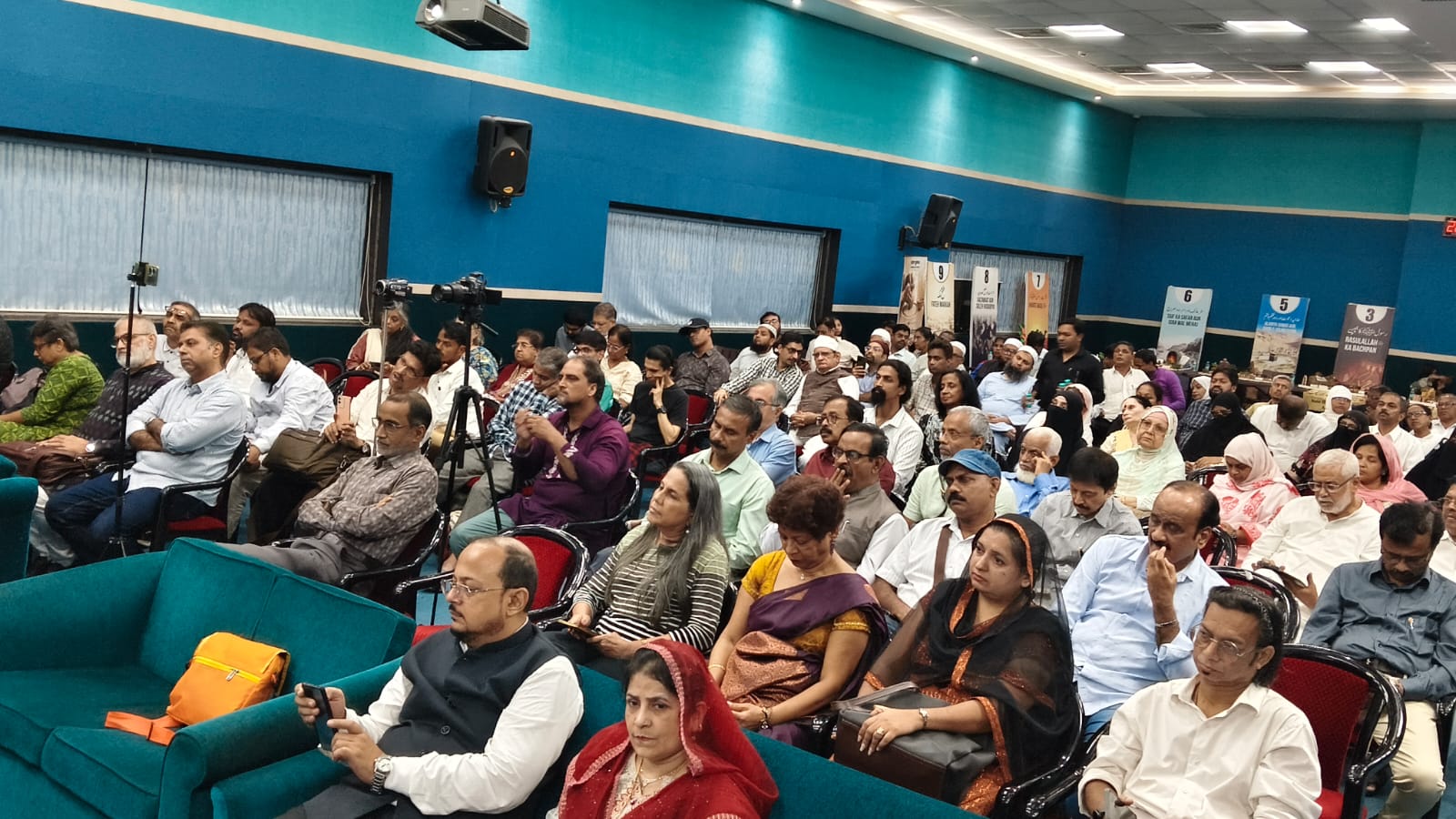
The programme was attended by 120+ participants, with approximately 50–60% of the participants coming from diverse religious, social and professional backgrounds.
Advocate Irfan Engineer, Director, Centre for Study of Society and Secularism (CSSS) and Co-Convenor, IRSC while introducing the programme, emphasised that the objective of IRSC is to oppose extremism, accept India’s religious and cultural diversity and promote dialogue between different faith communities. He said that the organisation’s programmes should not be seen merely as events but as part of a continuing process towards “universal brotherhood and sisterhood” and greater solidarity. He also highlighted the importance of finding shared values across different faiths as a basis for dialogue and mutual understanding.
Muzaffar Ansari, Interfaith relations Core Member, Jamat-e-Islami Hind while taking the discussion forward, highlighted the importance of translating faith into action. He remarked, “Emaan agar dil mein hai toh nazar bhi aana chahiye”, emphasising that faith should be reflected in how people respond to injustice and to the suffering of others. He further said, “Sirf sajdon se nahi badlegi duniya ki tasveer, zulm ke khilaf bolna bhi aana chahiye.” He also pointed out that interfaith dialogue does not require people to agree on everything, but requires sufficient respect to understand one another.
Dr. Salim Khan, Islamic Scholar and Core Member, IRSC discussed various aspects of the life of Prophet Muhammad and related them to the theme of justice and action. He gave examples from the life of the Prophet before and after prophethood. For example, his intervention to settle a dispute between tribes over the placement of the Black Stone, his involvement in peace treaties, his attitude toward people who opposed him and his care for the needy. He pointed to these episodes as examples of conflict resolution, compassion, honesty and justice.
Moderated by Stanley Fernandez, Core Member-Archdiocesan Commission for Inter Religious Dialogue and Co-Convenor, IRSC the panel discussion explored how principles of justice, equality and human dignity can be translated into common action across religious communities. “The objective is not to build a perfect society, but to keep on making efforts to create a society based on love, concern and dignity,” Mr. Fernandez said. “Respect is not agreement with you,” he said. Differences will remain, however recognizing and respecting these differences can be a starting point for dialogue and cooperation.
Rev.Fr. (Dr.) S. M. Michael, SVD, Chairman – Archdiocesan Commission for Inter Religious Dialogue, reflected on the Christian understanding of faith and action, referring to the teaching of Jesus to “love God and love your neighbour.” He said that love for God and concern for fellow human beings are inseparable, and that spirituality must be reflected through concrete action. Referring to the poor, neglected and vulnerable, he emphasised that human dignity is upheld through acts of care and service. Drawing from the teachings of Jesus, he said that feeding the hungry, giving water to the thirsty, clothing the naked and visiting those in prison are acts of service not only towards humanity but towards God. He concluded that justice, humanity and dignity are reflected in how people treat the most vulnerable members of society.
Ervad Homyar Nasirabadwalla, Zoroastrian Priest spoke about the Zoroastrian principle of Humata, Hukhta, Huvarshta – good thoughts, good words and good deeds. He emphasised respect for all religions and the importance of helping those in need. He said that faith becomes meaningful when it is reflected in one’s conduct.
Prabhu Keshav Chandra Das, Council Member, ISKCON Temple, Juhu and Convenor, IRSC talked about equality from the perspective of Sanatan tradition and emphasized the necessity of inner transformation. He argued that justice should be done not only when it is convenient but when it costs personal sacrifice. He also pointed out that religious life should not be confined to one’s own community but should encompass concern for all living beings.
Ms. Uzma Naheed, Director, Iqra Education Foundation, reflected on the teachings of Prophet Muhammad as an example of justice and social reform. She referred to the prevailing practice of slavery at the time and explained how the Prophet encouraged his companions to free enslaved people, associating their liberation with spiritual reward. She noted that this led to a wider practice among his companions of freeing those under their control. Through this example, she highlighted how the Prophet addressed existing social practices and worked towards greater justice and human dignity.
Sadguru Yogiraj Dr. Mangesh Da, Founder- Sadguru Mangeshda Kriya Yoga Foundation, reflected on the idea of oneness and shared humanity. He pointed out that while human beings may not all be blood relatives, they are connected through the same Creator who made that blood. Drawing from Hindu traditions and teachings, he spoke about the values of justice, sacrifice and compassion, referring to examples from the Ramayana and Mahabharata. He emphasised that every religion contains common moral values and that understanding these commonalities can help prevent differences from turning into divisions. He also stressed that religious values should not become so rigid that they cannot respond to changing times.
Dr Surinder Kaur, Assistant Professor, Guru Nanak College, Sion spoke on equality in Sikhism and mentioned Langar and Sangat as the practices which unite people irrespective of caste, class or religion. She stressed that the principles taught in religious books are meaningful only when they are lived.
Another major point of discussion was the barriers to interfaith cooperation. The panel identified some of the obstacles as religious exclusivism, fear of loss of one’s religious identity, historical grievances, mistrust, competition between religious organizations and excessive identification with one’s own community. Religious differences should be respected, not erased. Cooperation should be based on common concerns such as human dignity and suffering. Despite differences in religious beliefs and traditions, a common sentiment expressed throughout the programme was the importance of building harmonious relations between communities. The speakers and participants from different faith traditions emphasised that differences need not become barriers to dialogue, mutual respect and cooperation.
The program also featured an exhibition on the life of Prophet Muhammad and the social and historical setting of Arabia during his lifetime, in addition to the discussions. The event also included naat performances. Naat is a form of devotional poetry in praise of Prophet Muhammad. The naat was recited by Sayyed Mohammad Yasir Ahmed, Lecturer at Anjuman-I-Islam’s M.H. Saboo Siddik Polytechnic; Anushka Nikam, Singer and Theatre Artist; and Sandeep Lecturer at Jhunjhunwala College. The naat was performed in different languages, including Hindi/Urdu and Marathi, reflecting the interfaith character of the programme.
The overall impact of the programme lay in bringing together people from different religious traditions to engage with the life and teachings of Prophet Muhammad in a space of dialogue and mutual respect. At a time when Islam and Muslims are often viewed through the lens of prejudice and Islamophobia, the programme enabled religious representatives and participants from outside the Muslim community to engage directly with the Prophet’s teachings on justice, compassion, equality and human dignity. The programme demonstrated that engagement with the life and teachings of Prophet Muhammad was not limited to the Muslim community. Religious leaders and representatives from different traditions reflected on his contributions and found connections between his teachings and the ethical principles within their own faith traditions. This created an opportunity for greater understanding across religious boundaries.
Beyond the formal discussions, the participation of people from diverse communities, the Seerat exhibition, the literature displayed and the cultural performances created opportunities for interaction and learning. The programme therefore contributed to building trust and strengthening relationships between people from different religious and social backgrounds.
The program brought together diverse religious views with a common focus on justice, equality, compassion and human dignity. A recurring point throughout the discussion was that religious values only get meaning when they are reflected in everyday conduct and collective action, especially in response to injustice and in protecting the dignity of others.