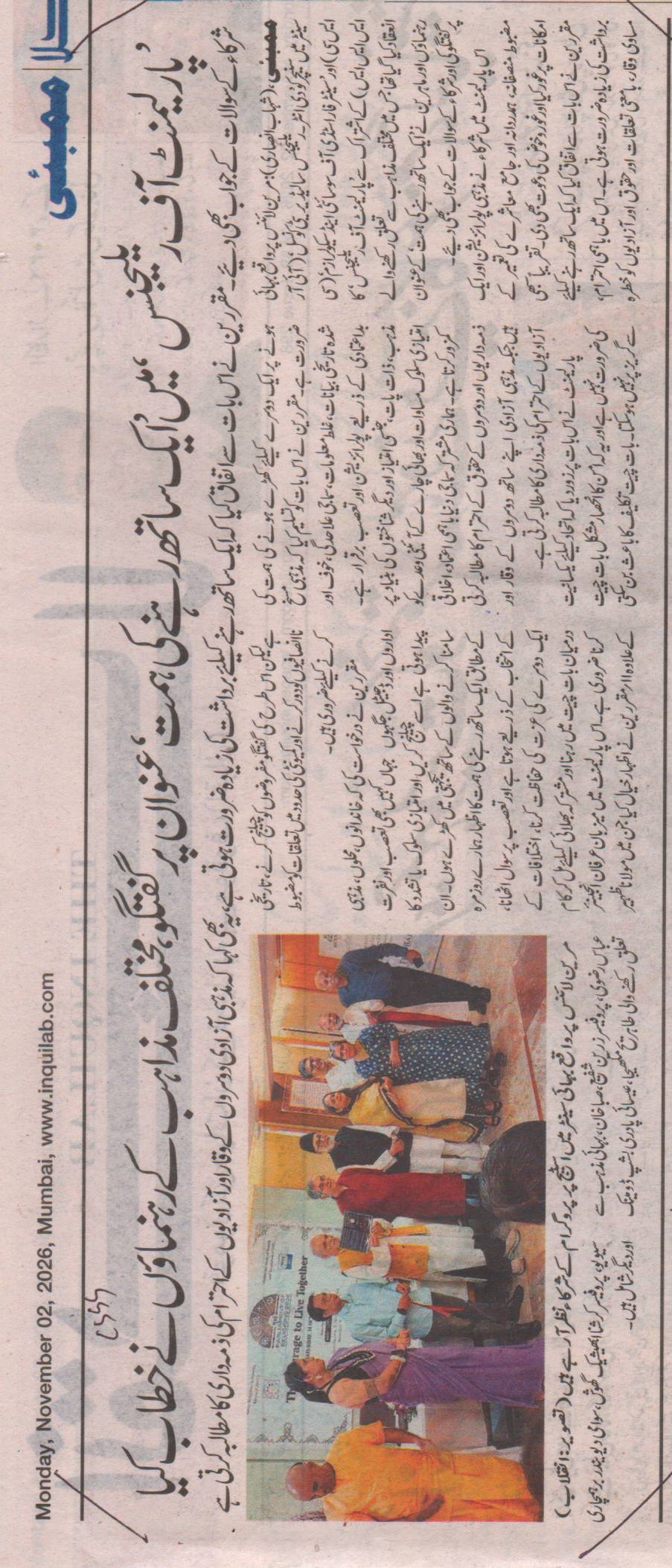
Statement of the Mumbai Parliament of Religions 2026
“The Courage to Live Together”
31 October 2026 | Mumbai
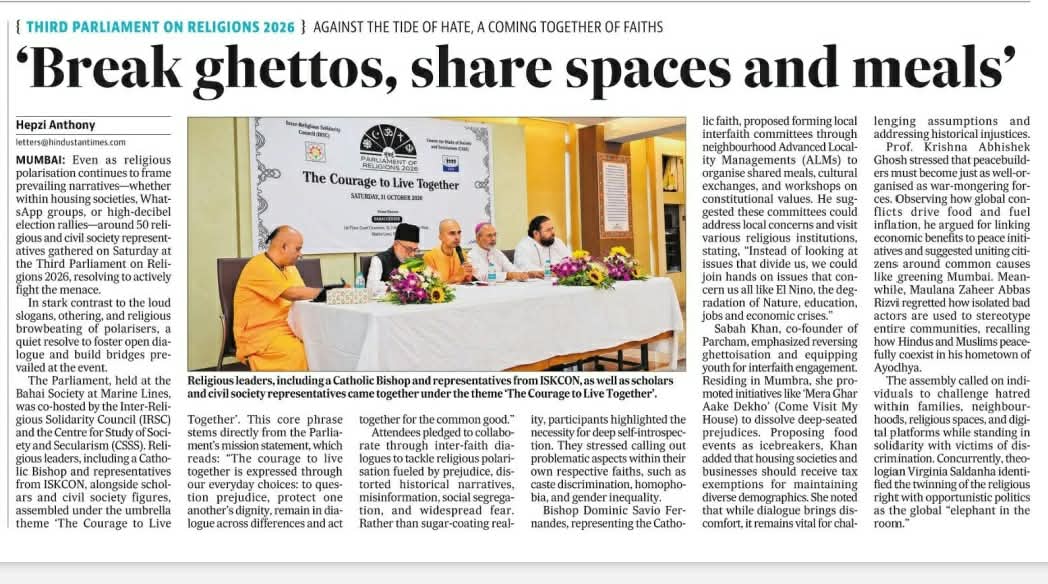
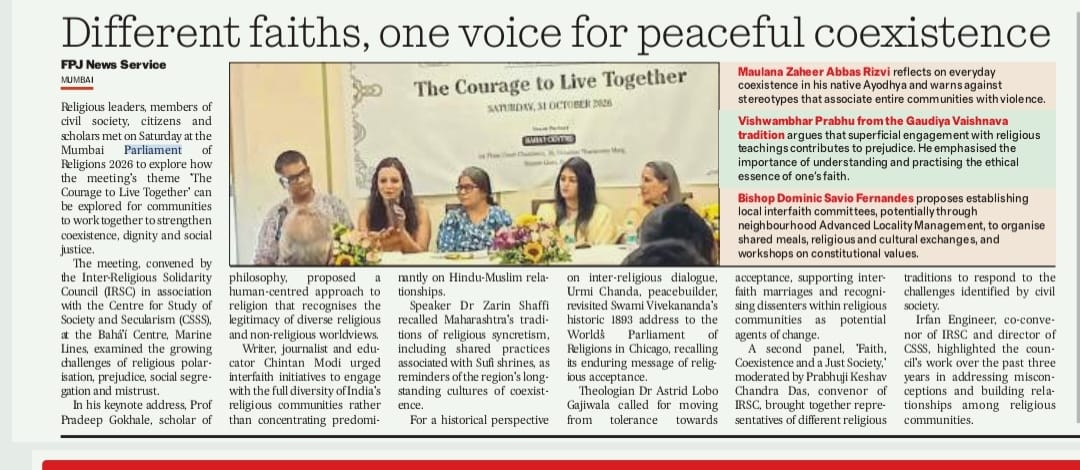
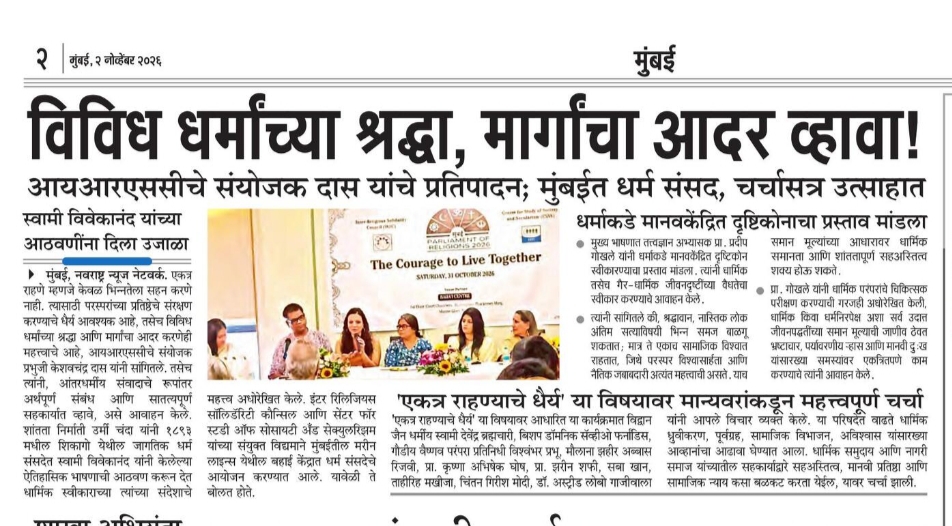
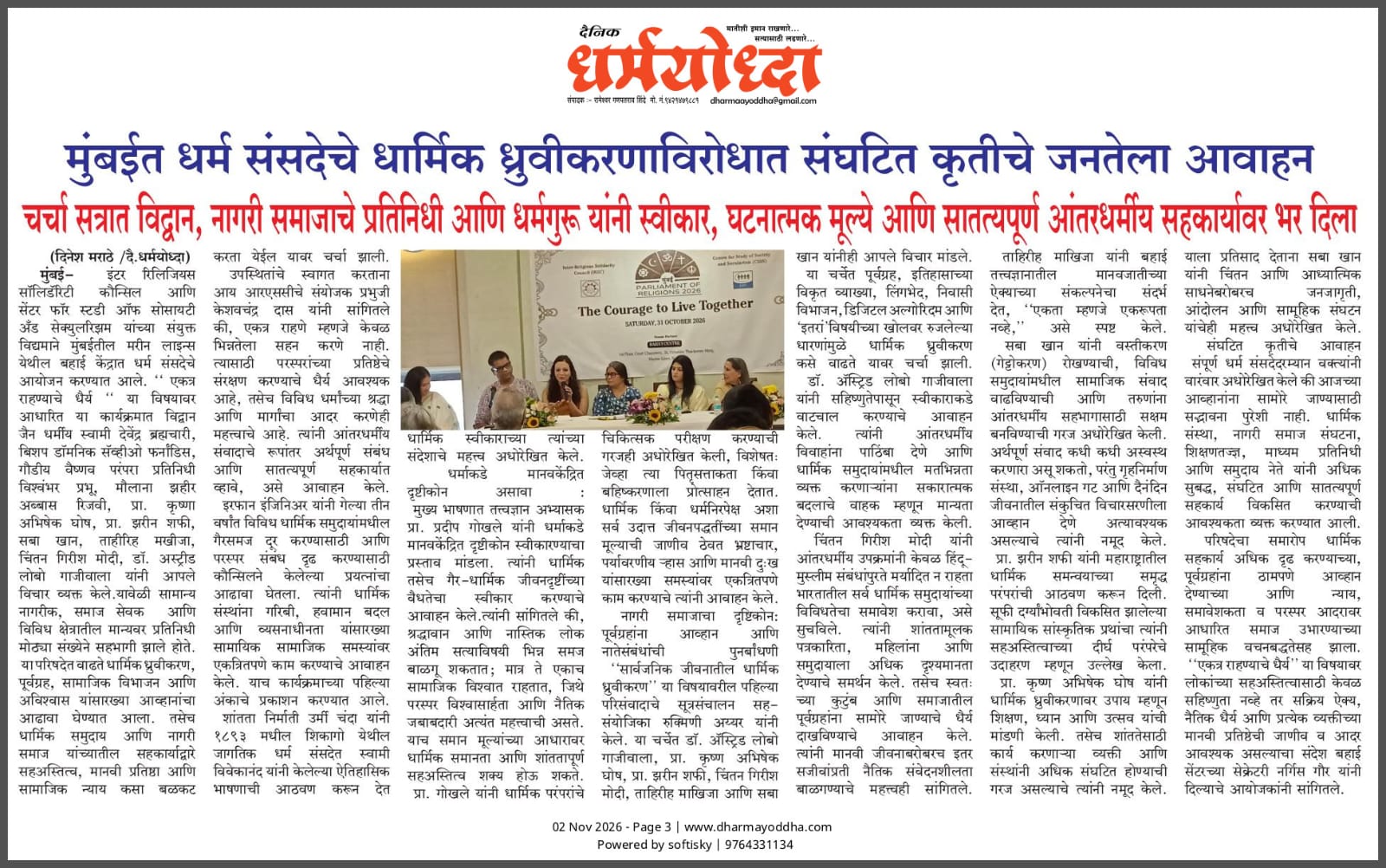
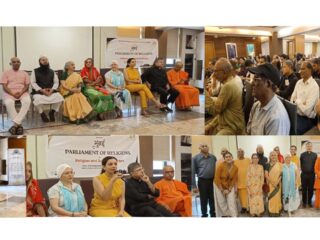
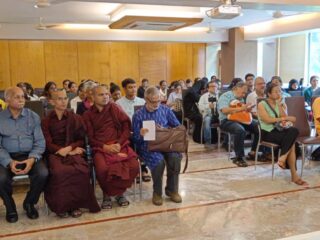
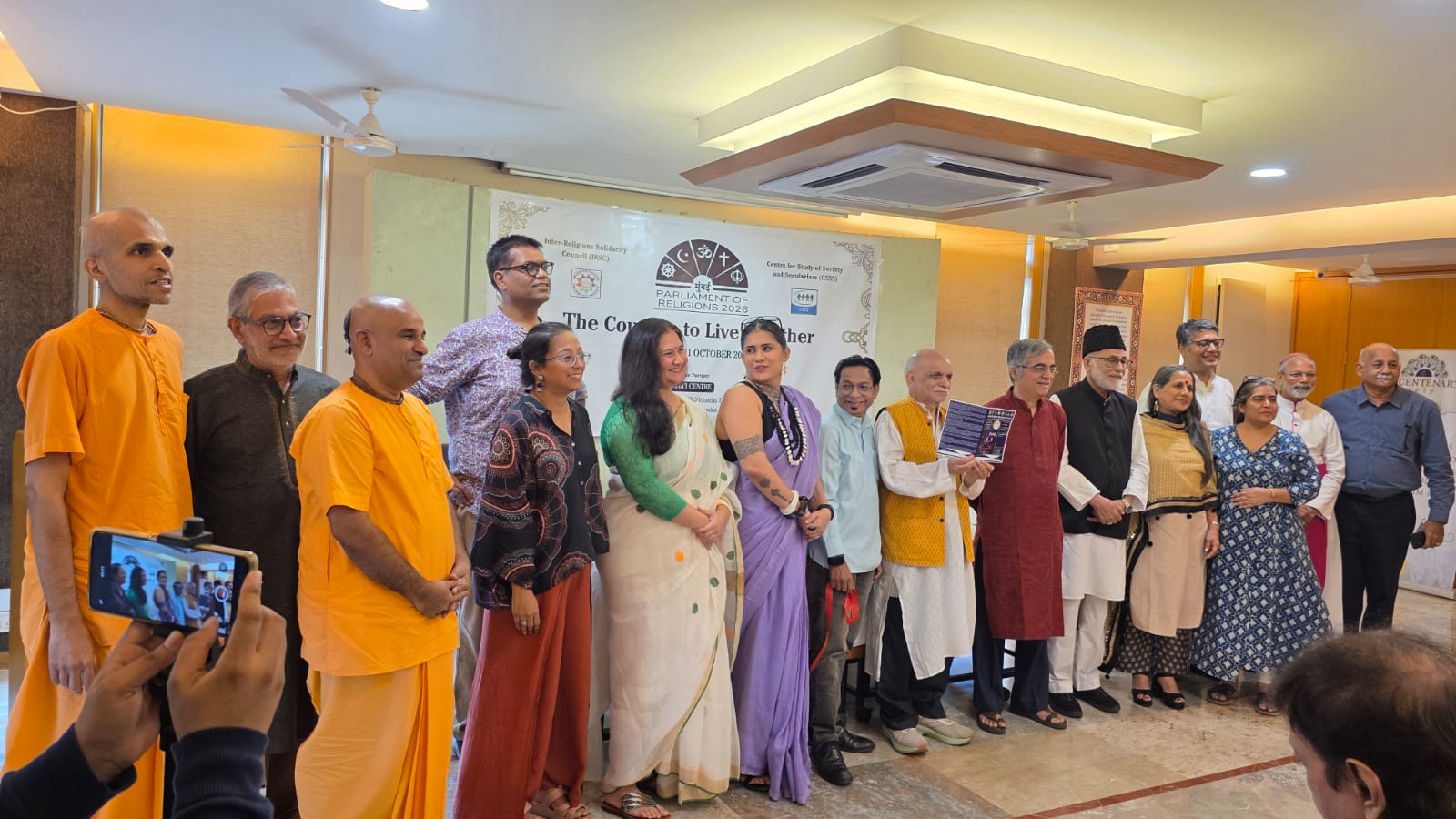
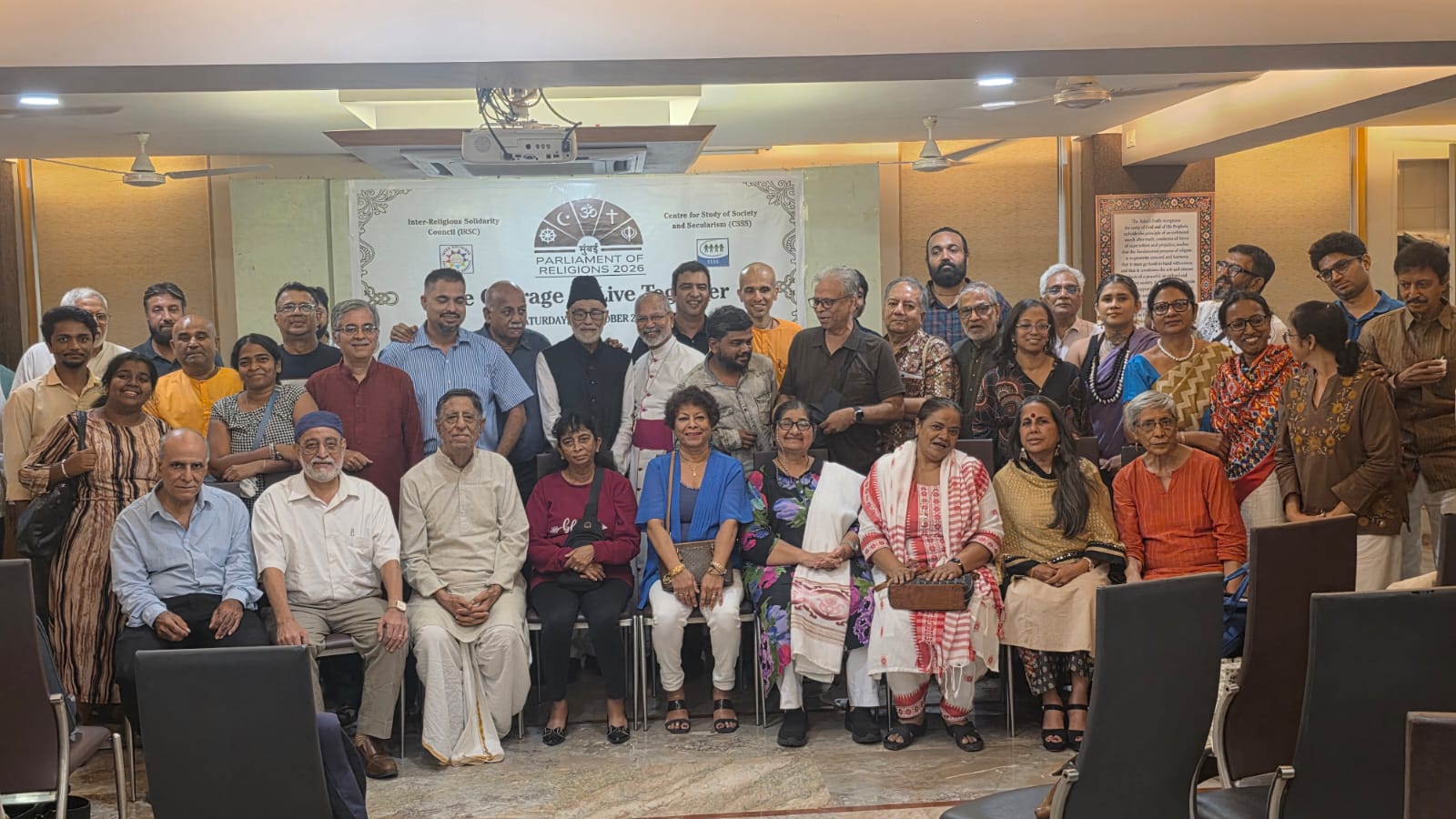
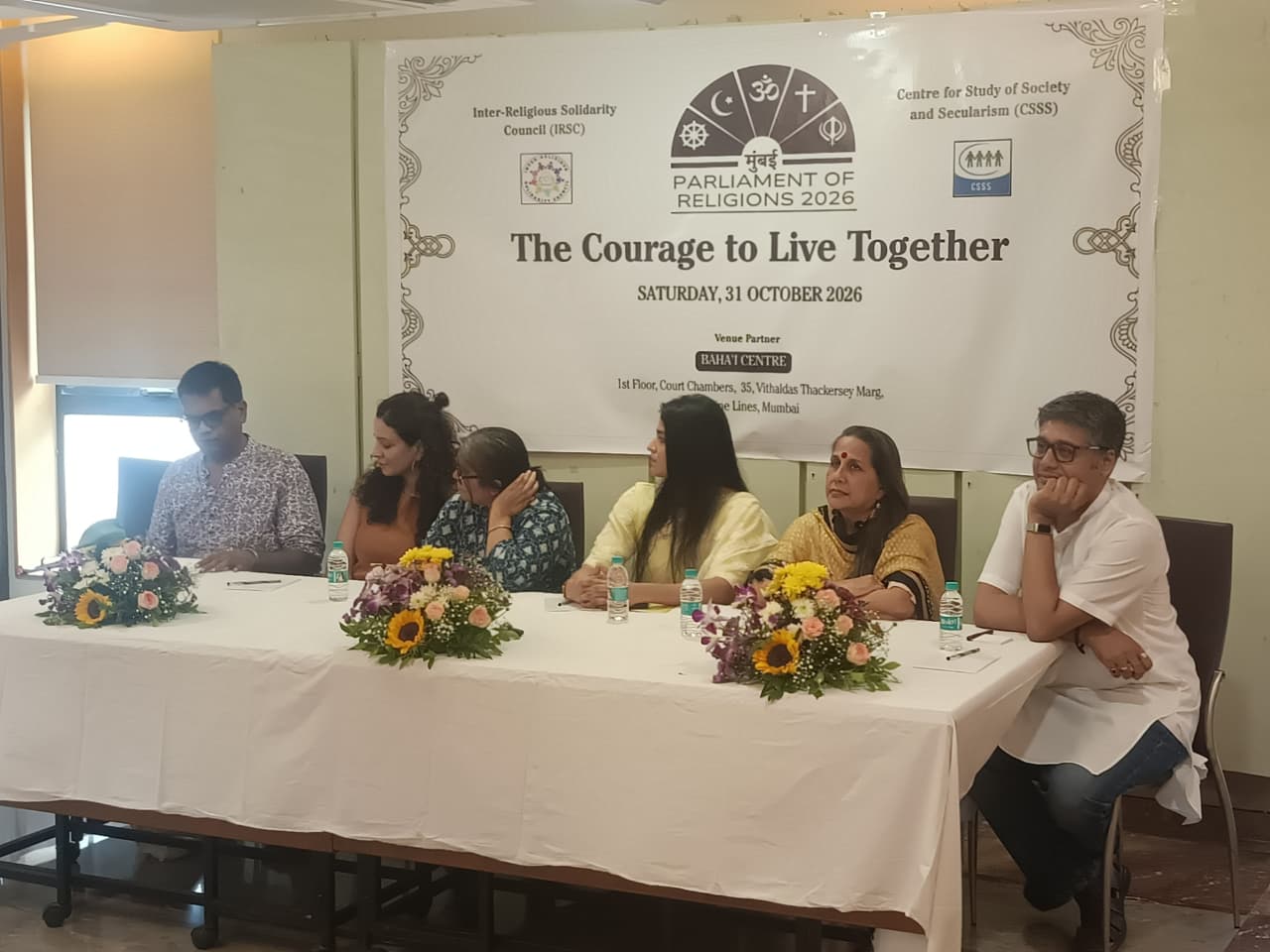
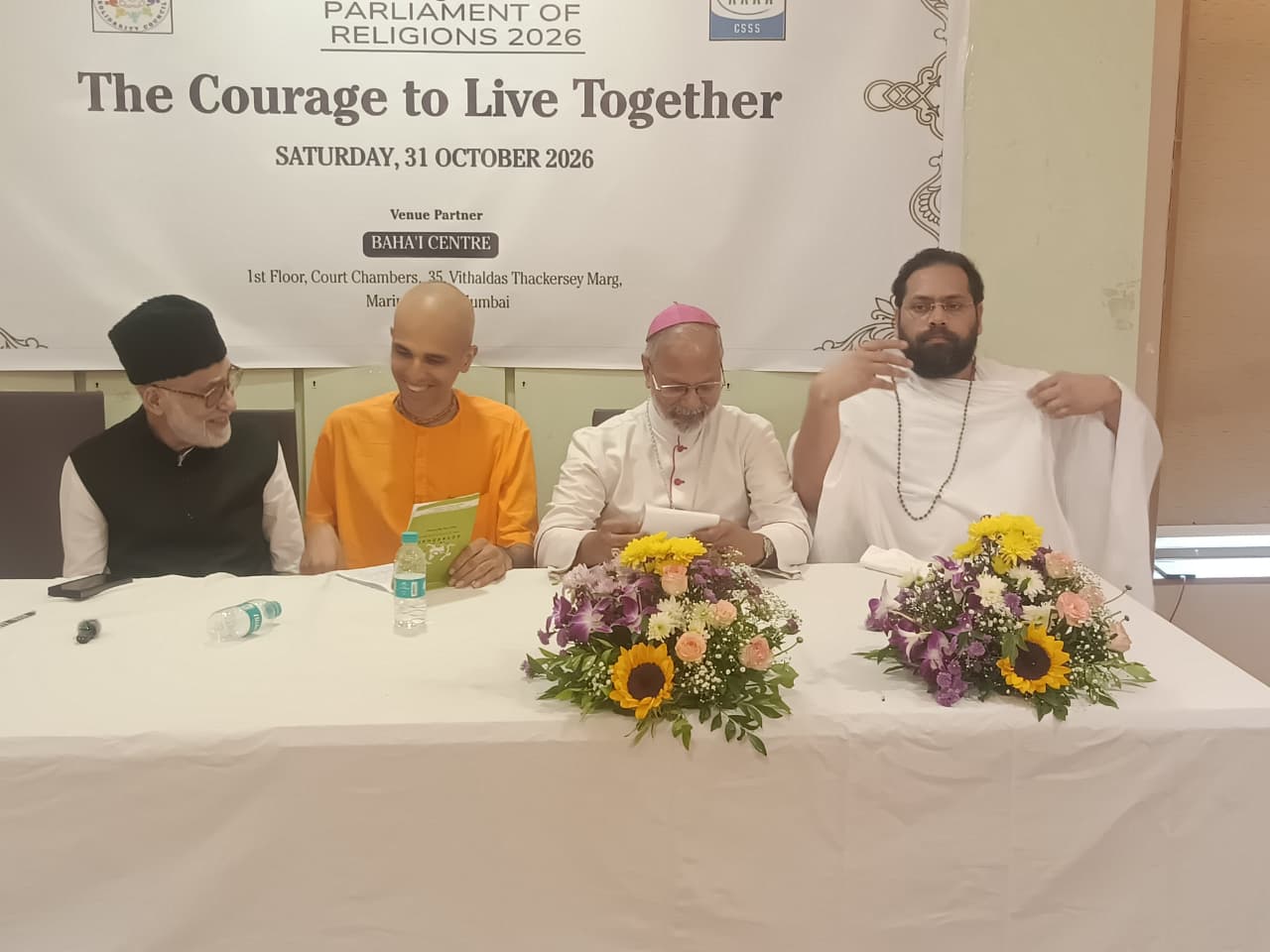 The Inter-Religious Solidarity Council (IRSC), in association with the Centre for Study of Society and Secularism (CSSS), convened the Mumbai Parliament of Religions 2026 under the theme “The Courage to Live Together.”
Bringing together scholars, civil society representatives, religious leaders and citizens, the Parliament reflected on religious polarisation and the possibilities for building a more just, compassionate and inclusive society.
Inspired by Swami Vivekananda’s message of religious acceptance at the 1893 World’s Parliament of Religions, we reaffirm that India’s religious, cultural and philosophical plurality is integral to our shared heritage.
Living together requires more than tolerance. It calls for mutual respect, equal dignity, meaningful relationships and the courage to stand up for one another when rights and freedoms are threatened.
The Parliament recognised that religious polarisation is sustained through prejudice, distorted historical narratives, misinformation, social segregation and the creation of fear and mistrust. Discrimination based on religion, caste, gender, sexuality and other identities undermines the constitutional promise of equality and fraternity.
We affirm that every person, whether religious or non-religious, has an equal claim to dignity, freedom of conscience, security and belonging. Different religious and philosophical worldviews can coexist without agreement on ultimate truths.
Our shared social world demands mutual trustworthiness, ethical responsibility and respect for the rights of others.
The discussions highlighted the need for critical examination within religious communities. Traditions that offer profound teachings on compassion, justice and non-violence must also confront practices and interpretations that perpetuate caste hierarchies, patriarchy, exclusion and hostility towards dissent.
Anti-caste perspectives are essential to any meaningful engagement with religion and social justice.
The use of religion to legitimise discrimination, hostility or violence against LGBTQIA+ people, including mobilisation against their equal rights and relationships, demands particular scrutiny.
Religious freedom carries with it the responsibility to respect the dignity and freedoms of others.
The Parliament emphasised that unity does not require uniformity, and that peace cannot depend upon avoiding difficult conversations. Dialogue may bring discomfort, yet such encounters are necessary for challenging assumptions, addressing historical injustices and strengthening relationships across community boundaries.
In this spirit, we call upon religious communities, civil society organisations, educational institutions, the media, public authorities and citizens to:
- Challenge prejudice and hatred wherever they arise, including within families, neighbourhoods, religious institutions and digital spaces, and stand in solidarity with those facing discrimination or violence.
- Uphold constitutional values of equality, liberty, fraternity and freedom of conscience, including the rights and dignity of Dalit, Adivasi, LGBTQIA+ and other historically marginalised communities.
- Create sustained spaces for interreligious encounters, particularly among young people, through shared meals, cultural exchanges, neighbourhood initiatives, educational programmes and visits to one another’s community spaces.
- Strengthen responsible public narratives by challenging misinformation, recognising India’s histories of religious coexistence, and amplifying voices working for peace, including women, young people and marginalised communities.
- Encourage local interfaith committees and collaborative initiatives to address shared concerns, including caste discrimination, poverty, social exclusion, ecological degradation and neighbourhood tensions.
- Organise for peace, supporting sustained relationships, collective action and institutions capable of responding to polarisation, injustice and conflict.
The Parliament also acknowledged the importance of extending compassion and ethical responsibility towards the wider living world.
IRSC commits to carrying forward the conversations and proposals emerging from this gathering, encouraging collaboration among religious and civil society institutions and sharing its learnings with others seeking to strengthen interreligious solidarity.
The courage to live together is expressed through our everyday choices: to question prejudice, protect one another’s dignity, remain in dialogue across differences and act together for the common good.
*Issued by the Inter-Religious Solidarity Council (IRSC), in association with the Centre for Study of Society and Secularism (CSSS), Mumbai, 31 October 2026.
Media Coverage: