Fact Finding Report by CSSS
05/08/2026
Introduction:
On 17th March, 2025, communal riot was reported from the Mahal area of Nagpur. The media reports described that right-wing groups, Vishwa Hindu Parishad (VHP) and Bajrang Dal had organized protests near the Shivaji Statue in Mahal area around 11.30am. The protests came in the backdrop of the film ‘Chaava’. The film which claimed to have portrayed the life of the Maratha King – Sambhaji Maharaj, who was the son of Medieval Hindu ruler Chhatrapati Shivaji Maharaj and his successor to the Maratha Empire and the rule of the Mughal Emperor Aurangzeb. Many viewers of the film reacted emotionally to the manner in which Sambhaji Maharaj was purportedly put to death by Aurangzeb. It was reported that the right-wing Hindu nationalists, including the Maharashtra Chief Minister, Devendra Fadnavis, demanded that the tomb of Aurangzeb in Khuldabad near Chhatrapati Sambhaji Nagar, formerly Aurangabad, should be demolished. Reportedly the protest in Nagpur turned violent when some protestors burnt an effigy of the tomb of Aurangzeb wrapped with the traditional cloth offered at Sufi Shrines – Chadar – with Kalma – confession of Islamic faith in Arabic – written on it. This allegedly enraged a section of Muslim onlookers, who objected to setting aflame the Kalma, but not the effigy of Aurangzeb. That the chadar was containing any holy scriptures or writing was denied by the Chief Minister, Devendra Fadnavis.
It was reported in the media that a Muslim mob then subsequently vandalized vehicles and attacked the police personnel through the day of 17th March, 2025. The injured included 33 police personnel, including three deputy commissioners of police (DCP). In response, 123 individuals, including 19 minors, were arrested, and most of them are still being investigated. The Nagpur Municipal Corporation demolished the house of one of the accused, Fahim Khan, which attracted adverse remarks from the judiciary. A house of other co-accused was partially demolished.
The media and the narrative of the state about the reasons and the way the communal riots unfolded in Nagpur painted a stark picture where the blame for these “planned” riots was squarely placed on the Muslims alone. The Chief Minister himself in his statements to the media gave an account of the violence. He said, “We got a trolley of stones, indicating planning, and some specified houses and institutions were targeted.” Describing what he said was the sequence of events, the Chief Minister said, “Vishwa Hindu Parishad and Bajrang Dal held an agitation to press for removal of Aurangzeb’s grave… they raised slogans like ‘remove Aurangzeb’s grave’ and burnt a symbolic grave with bundles of grass…” The CM denied that the chadar had the holy scripture on it and that it enraged the Muslims. He claimed that the chadar with the holy text as merely a rumour. He said “Later a rumour was spread – that the symbolic grave had religious text on the cloth covering it. After namaz a crowd of 250 people came to the place and started shouting slogans. When people started saying they would set vehicles on fire, police used force. (NDTV, 2025)”
These statements amongst other similar media reports and statements put the onus of the violence in Nagpur on Muslims. The statements depicted a sinister and well-organized communal riot orchestrated by the Muslims and which caused huge damage- including serious injuries to police personnel, vandalizing of vehicles (two wheelers and four wheelers), mobs hurling stones on residents and houses. One report stated that around 40 vehicles and two JCB machines were torched, police vans vandalized and a dozen cops including two IPS officers injured in stone pelting as per the report of Times of India on 18th March, 2025. Ironically, one person who died in this riot was Irfan Ansari, a resident of Garib Nawaz Nagar and a welder by profession who was attacked by a mob near Geetanjali chowk and Hansapuri. The impression given by the media reports of the unilateral aggression of the Muslims led CSSS to undertake a fact-finding mission to Nagpur to study the causes of the communal riots. CSSS probed into the impact of this communal riot on the social landscape of Nagpur, especially the intercommunity relations between the Hindus and Muslims in Nagpur. The CSSS fact finding team consisted of Irfan Engineer, Director of Centre for Study of Society and Secularism (CSSS) and Neha Dabhade, Executive Director of CSSS. The fact-finding team visited Nagpur from 27th to 30th September, 2025.
Methodology:
The fact-finding team in the course of visit to Nagpur met different stakeholders – the shopkeepers in Mahal area around the Shivaji statue and eye witnesses of the torching of the effigy and the subsequent communal riots, the accused arrested for the riots, historian- Dr. Mohammad Sharfuddin Sahil, civil society organizations, journalists, retired bureaucrats, members of political parties and advocates who are fighting the cases of some of the accused and finally, the brother of Irfan Ansari who lost his life when a Hindu mob attacked him in the evening of 17th March, while he was walking towards the railway station to catch a train.
The Fact-finding team attempted to meet the Commissioner of Police in Nagpur and waited to meet him at the Commissioner’s office for almost four hours. But the Commissioner was busy with other engagements. The Team also tried to meet Kamal Haryanvi, Bajrang Dal leader. He initially gave an appointment to the team but later cancelled it. Thus, the team could not meet him.
The team also looked at some videos of the burning of the effigy. The team tried to get an overall picture of the society of Nagpur- its political, historical and social landscape and particularly facts about the events that unfolded on 17th March and its impact on society.
Background of Nagpur:
Nagpur is a city known for its diverse culture and peaceful living together of different communities and religions. In fact, its history of peaceful co-existence stretches all the way back to the 18th century under the rule of Raghoji Bhonsle I, a notable king associated with promoting peaceful relations in the region around Nagpur. Though a Maratha ruler known for his military conquests, he maintained generally positive relations and political alliances with different kings and nobility from different religious communities in his kingdom and outside. Under the Bhonsles, Hindu-Muslim coexistence was encouraged, and they extended patronage to Hindu temples, Muslim mosques, and other religious institutions alike. This helped Nagpur remain a culturally diverse and relatively harmonious region during their rule.
According to the 2011 census, about 69% of the people in Nagpur follow Hinduism, 15% follow Buddhism, and nearly 12% are Muslims. Even though some media shows Nagpur as a place of communal violence, especially after the clashes in March 2025, the truth is different. Nagpur has experienced enduring communal harmony, syncretic traditions and social reforms.
Nagpur’s syncretic culture is evident in its festive traditions. Its Marbat festival is a centuries old tradition where people from different religions come together to burn massive effigies representing evil at Nehru Putla Square. Participants from various religious backgrounds join in shouting “Take away all evil and go, Marbat.” Attar Gali in the city’s Mahal area is named after its traditional perfume shops, most of which are owned by Muslims. Despite this, the lane has been an essential part of the Ganesh Chaturthi festival for decades, as devotees flock every year to buy “attar”, a natural perfume, in preparation for the celebrations. Additionally, the Halba Koshti weaver community in Nagpur, originally tribal migrants, blend tribal, Hindu, and Muslim customs through their weaving craft, language, and cuisine. Their participation in local Muslim festivals like Muharram and their famous handloom sarees symbolize inter-religious harmony.
Nagpur has been the bedrock of the Dalit movement spearheaded by Dr. B. R Ambedkar. Nagpur has witnessed the struggle of the Dalits especially the Mahar community through the different annals of India’s independence movement and Ambedkar’s emphasis on equal treatment of Dalits and greater electoral representation of Dalits through the Poona Pact. The Dalits in Nagpur strove under the leadership of Ambedkar to resist, organize and fight for annihilation of caste and strengthen equality. Nagpur also experienced the historic mass conversion of lakhs of Dalits to Buddhism in Nagpur on October 14, 1956, which is considered a landmark event in Dalit history and the birth of the Neo-Buddhist (Navayana) movement. This conversion was a spiritual and political act to break free from the caste system’s oppression within Hinduism, laying the foundation for a new identity based on Buddhism’s principles of equality and rationality. Ambedkar’s legacy in Nagpur also includes providing a spiritual and political framework for the Dalit movement, strengthening its resolve, and promoting self-respect and liberation. These values of equality and Constitutionalism resonate in the social fabric of Nagpur and has contributed to its collective social consciousness.
Nagpur is also a place of contradictions. On the one hand where Nagpur has been part of progressive movements for equality, on the other hand, it is also home to the Rashtriya Swayamsevak Sangh (RSS), the single largest organization celebrating its 100th anniversary in 2025 which is the fountainhead of the ideology of Hindu supremacy and publicly espousing the cause of Hindu rashtra or Hindu nation. It is believed that Keshav Baliram Hedgewar founded the RSS in 1925 after witnessing the Nagpur riots of 1923. This communal riot in 1923 was triggered when a procession of Hindus insisted on passing in front of a mosque with music. According to a right-wing website, this procession was led by Hindu Mahasabha on the occasion of Lakshmi Puja[1]. Communal tensions continued to rock Nagpur in 1924 and 1925. These tensions reflected brewing communal conflict between Hindus and Muslims in Nagpur, which was one of the factors which deeply influenced Hedgewar to found the RSS with the aim of uniting and organizing Hindus for self-defense and socio-political solidarity. Despite the presence of the RSS, the people of Nagpur have mostly lived together peacefully for many years.
The electoral history of Nagpur points towards a more secular politics where the right wing got a hold only a few years back. The political representation of Nagpur has largely alternated between the Indian National Congress (INC) and Bharatiya Janata Party (BJP) over the decades. The city has been under Congress rule from the early 1950s to the early 1990s with leaders like Anasuyabai Kale and Banwarilal Purohit among others serving as Members of Parliament. However, since the mid-1990s, the Bharatiya Janata Party, which has deep roots in the city through the RSS, gradually gained prominence. In the 2024 Nagpur Assembly Elections, the BJP won 4 out 5 assembly seats in Nagpur North, East, South and South West constituencies, with the INC candidate elected to the North West constituency.
Main Findings of the Fact-Finding Team:
- What happened on the morning of 17th March?
From the eye witnesses, Aman Shivankar, owner of a shop at the Shivaji Statue chowk, the fact-finding team gathered how communal tensions unfolded on 17th March, 2025. On the occasion of Shivaji Jayanti, the VHP and the Bajrang Dal, had obtained permission for protests at the Shivaji Statue in Mahal area, demanding the removal of Aurangzeb’s tomb at Khuldabad in Chhatrapati Sambhajinagar. Shivankar narrated that the protestors gathered around the statue at around 11am. There were around 20 to 30 protestors who gathered. According to him, they were shouting anti-Muslim slogans. There were also anti- Aurangzeb slogans raised by the protestors. Shivankar and another Hindu shopkeeper who didn’t want to be named but has a shop at the Chowk, narrated to the fact-finding team that the Muslim onlookers were calm when these slogans were being shouted by the aggressive protestors. Shivankar said that around noon, the protestors started burning an effigy which had a chaddar with Arabic text written on it. The protestors were stamping the effigy with the chaddar, dragging it on the ground, and beating it with sticks. This was verified by the Hindu shopkeepers, eye witnesses, and the videos clips of the incident.
Shivankar emphasized that the disrespect to the chaddar with Kalama written on it upset the Muslim onlookers who then approached the protestors and the police present there to stop disrespect to the chaddar. The police did very little to stop the disrespect to the chaddar. However, the police diffused the situation. The crowd dispersed from Mahal area. According to Manohar Mulay, member of CPI Party, when the Muslim onlookers approached the police who were looking on when the chadar was being stamped by the protestors, the police not only didn’t act or take any serious action but also lathicharged some Muslim youth who demanded action. The police also rounded off some Muslim youth and detained them.
Some Muslims led by Fahim khan approached Ganesh Peth police station that afternoon with the demand to immediately arrest the miscreants who disrespected the chaddar. Khan also demanded that the innocent Muslim youth who were detained should be released. Instead of taking immediate stringent action against the miscreants, the police manhandled and beat some of the young Muslim youth who were protesting the inaction of the police. That angered the Muslims further. Though the police wrote down the FIR, the police didn’t include any stringent appropriate sections nor arrested anyone. The Muslims left the police station.
In the meanwhile, one of the social media influencers, Muqarrib Jafri, made a video on social media stating that the police are not taking any action against the culprits and that the Muslims should assemble at the police station to put pressure on the police to act. His account was suspended and forced to abscond after he was blamed for violence. The police however arrested Hamid Engineer, Chief of the Minorities Democratic Party (MDP) and youtuber Mohammad Shahzad Khan who runs the channel NNTV on youtube for inciting violence through their social media videos. They both were in prison for a month.
The Muslims were assured by the police that action will be taken against the miscreants by the evening. However, by the evening too, no action was taken against the miscreants. At around 6pm, after the Maghrib prayers, the Muslims gathered around the Shivaji statue in Mahal area again. There saw again that the miscreants who were present in the morning involved in disrespecting the chadar were still at large and seen in the evening raising aggressive slogans. There was also a Hindu mob which had gathered in the afternoon near the Shivaji statue. The Muslims demanded again to the police to arrest the culprits. According to an eye witness, in the chowk of the Shivaji statue, three sides were dominated by the Hindu mob. The Muslim mob was one side. Due to lack of punitive action against the miscreants who disrespected the chaddar, the Muslim mob clashed with the Hindu mob and the police. The police personnel sustained injuries as per the police personnel and journalists in the clash. The police dispersed the Muslim mob with force and chased after them.
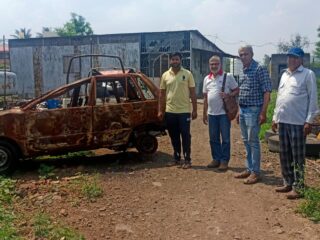
The Muslim mob then dispersed into different by lanes and alleys. At around 10.30 pm, in Hansapuri lane, the vehicles of Hindu shopkeepers were vandalized. Around 12 to 13 bikes and one car was burnt. According to the residents of the area and owners of the vehicles, the faces of the people in the mob were covered. Around the same time, a mob attacked Irfan Ansari who was on his way to the railway station to board a train for Itarsi on the evening of 17th March, 2025. The mob severely beat up Irfan Ansari who was a welder. He had severe head injuries. He died in a government hospital after six days.
- The extent of “damage” inflicted by “Muslim” mob:
One of the important reasons, CSSS decided to undertake the fact finding into this incident of communal riots was the alleged aggression and violence perpetrated by the Muslims as had appeared into the newspaper reports. The reporting in the newspapers gave a lopsided picture of the communal riot, reporting that there were houses and many vehicles vandalized. From the media reports, the fact-finding team went with the presumption that based on mere rumours of burning or desecration of the holy chadar, a section of the Muslims in Nagpur attacked many police officers, Hindu households and shops, vehicles, and properties. The impression from the media reports hinted at continuous attacks by a section of Muslims for a couple of days. The larger narrative based on such reports depicted the Muslims as the sole aggressors, triggered by religious intolerance.
However, during the visit of the fact-finding team to Nagpur and during the interactions with Hindus and Muslims both, one point that was reiterated by all was that Muslims in Nagpur are very peaceful and the relations between Hindus and Muslims have been marked by non- violence, respect and peace. The Hindu shopkeepers like Shivankar around the Shivaji statue narrated to the fact-finding team that the Muslims who were gathered in the morning around the Shivaji Statue didn’t object to the protests or slogans against Aurangzeb delivered by the VHP and Bajrang Dal. But after the protestors dragged on the ground, kicked and burst effigy covered in the Holy Chadar, the Muslims approached the police present on the spot. The Muslims hadn’t attacked the police or the protestors but demanded that the police take action against the desecration. The Hindu shopkeepers went on to say in the evening too when the Hindu right wing members garlanded the Shivaji statue, the Muslims around the chowk approached the police present there to seek action for the desecration that took place in the morning. When the police still refused to act, the mob became aggressive and attacked the police. However, no shops or homes around were attacked or vandalized.
One salient point to be noted as one eye witness to the violence in the evening, told the fact-finding team that while there was a mob of Muslims on one road converging to the chowk, three roads had a pre-dominantly mobs of Hindu right wing. Thus, there was also mobilization of Hindu right wing. The police used force only against the Muslim mob to disperse them. This mob dispersed into the lanes of Hansapuri. The Hindu shopkeepers, Shrikant Kawale and Lokesh in the Hansapuri told the fact-finding team that a mob entered the lane around 11pm. The people in the mob had covered their faces. They burnt bikes parked in the lane. When asked by the fact-finding team who these miscreants were, the shopkeepers said that they can’t know for certain if they were Muslims because their faces were covered and that the relations between the Hindu and Muslim community have always been positive and peaceful and remains so. If they were Muslims, they were outsiders.
- The Role of the State:
The communal riot in Nagpur reflected the political agenda of the ruling dispensation and the police and administration carrying it out with legal instruments. The Muslim community and specific Muslim individuals who demanded accountability were made to take the fall for the communal riots. This communal riot also exposes the impunity granted to the Hindu right wing by the state to blatantly disrespect the sentiments of the Muslims through acts of desecration and provoke them. The role of the police in the communal riots in Nagpur is to be largely blamed. The police not only failed to prevent the communal riots, their action after the riots to bring the perpetrators to justice has been lop-sided, biased and seemingly targeting the Muslim community.
The police were present on the spot of protest on the morning of 17th March, 2025. The police witnessed the abusive slogans raised by the Hindu Right-Wing organizers of the protest. The police witnessed the desecration of the holy chadar in the protest. Despite the demands by the Muslim by lookers to act against those desecrating the holy chadar, the police didn’t act in the morning. It didn’t register a FIR with stringent sections. Even when Fahim Khan approached the police and tried to put pressure, the police reluctantly filed a FIR without any stringent sections. The police in fact manhandle some Muslim youth who had come to the Ganesh Peth police station.
When the Hindu right-wing groups gathered again at 5pm at the Shivaji Statue in the Mahal area, Muslims in the area again approached the police to arrest the miscreants against whom no action was taken. In the evening, according to eye witnesses, there was a Muslim mob but also Hindu mobs as well. But the police acted chased out the mob with Muslims.
Four FIRs were filed in the cases related to the communal riots at the Ganesh Peth Police station against 100 persons against the Muslim protestors. One FIR was filed in Tehsil Police station which covers Mominpura and Hansapuri related to Irfan Ansari’s death. The third FIR was filed in Kotwali police station, and the fourth FIR was filed related to social media posts and videos. Interestingly, in the case of Irfan Ansari’s death, the police have arrested 9 persons – eight amongst them Muslims and one Hindu, Santosh Gaur who is aged and a cancer patient. The question raised by the civil society and the Muslims is that why a Muslim mob will kill a Muslim man? The team were told that Santosh Gaur’s name was added to the FIR for the investigation to appear impartial, implicating even a Hindu for namesake. However, the team was told, the police chose an aged and an ailing Hindu man, who would easily get bail on medical grounds, while the Muslim accused would be denied the same. Indeed, Santosh Gaur got bail. Muslims believe that all those arrested for Irfan Ansari’s murder, including Santosh Gaur, is innocent.
The penal action too unduly targeted the Muslims. The police arrested mostly Muslims. The fact-finding team met some of the arrested. Faizan Shaikh, aged 25, and Adnan Shaikh, 34, are brothers living in Bhadalpura area. Faizan is a student of Bachelors of Commerce and Adnan drives his own car listed with Uber and Ola. His livelihood and sustenance of his family depends on his earnings from driving.
17th March, 2025 marked the 10th day of his father’s death- his father passed away on 8th March, 2025. On 17th March, the family hosted a ceremony for the 10th day ritual, and there were many guests and relatives who were there to offer the family condolences. Around 9.30 pm, the police barged into their house and demanded that the brothers come with them to the police station for their alleged involvement in the riots. The women in the family, Faizan and Adnan’s mother, their sister Bushra Shaikh and Adnan’s wife, begged with the police to leave the brothers alone, explaining that there was a death in the family and the boys were at home for the prayers and with guests and nowhere near the sites of communal riots and certainly didn’t participate in the violence.
However, the police did not pay any heed to their cries. As some a group of people or mob had run into the lane where this family lived, the police targeted the residents living in the houses in this lane and started beating those gathered indiscriminately and dragged Adnan out and arrested him. They vandalized the belongings in the house. They dragged both the brothers from their homes, beating them on the way till the police vehicle stationed in Chitnis Park which is approximately 250 meters. One of the police personnel hit Faizan with a plastic baton on his left eye damaging the nerve of his eye causing loss of vision in that eye. In the police station too, the brothers were severely beaten up. The injuries were so severe on their bodies along with the injuries on the bodies of other accused that the judge in the court where they were produced the next day had to ask the police to take them to the hospital for medical examination and treatment. The injuries were visibly stark.
Faizan complained about the loss of visibility in his eye. While he was admitted in the government hospital, Bushra, his sister said that he was treated like a criminal and not given adequate medical attention. Bushra insisted with the police to let her take Faizan to a private hospital to get the much-needed medical treatment for his eye. Faizan was finally released to avail of treatment and asked to report to the police station regularly. However, Adnan spent 110 days in prison. Adnan not only lost his income for the days he spent in prison, but after getting out of prison, he lost his contracts with Uber and Ola since he has criminal charges against him. This is in accordance with their policy. This has left the family in a severe financial lurch. Faizan, who is partially visually impaired, has bleak career prospects. Adnan is facing financial loss and social stigma after losing his job as a driver with Uber. His earnings have completely stopped while his monthly installments are piling up for purchase of the car. Their big household is currently being supported by Bushra who works as an executive in an MNC. She lamented that her prospects of a good proposal for marriage are greatly diminished by the criminal charges that her brothers face.
18 residents were arrested by the police from Bhadalpura area on the same morning. More than 100 persons were arrested in the FIRs filed by the police. There are numerous stories similar to Faizan’s and Adnan’s.
The two main accused, Kamal Haryanvi and Amol Thackarey, Bajrang Dal leader, including others, were never arrested by the police. They surrendered twelve days after the communal riot at the Kotwali police state. They secured bail in two hours. Amol Thackeray has been an active member of the Bajrang Dal and been enthusiastic in anti- Valentine Day campaigns in the past. In the past, he has advocated marrying off couples who were found together in public spaces on valentine’s day. Touting such actions as a bid to save “Indian culture”, he roamed the streets with mangalsutra and vermilion to forcefully marry couples on Valentines Day (Times of India, 2010).
He was also active in demanding safety of Hindus in Murshidabad and West Bengal after riots took place in Murshidabad in April 2025. He went to an extent of demanding dismissal of the Mamta Banerjee government in West Bengal by the Centre, threatening protests in different parts of India (Arya , 2025).
Kamal Haryanvi is Bajrang Dal leader in Nagpur. He has been in the past booked for hate speeches against Muslim community (The Print, 2014). He has also been a cow vigilante. More recently he demanded the identification of each person who wish to enter garba pandals be checked and verified.
The interaction with Fahim Khan too was very insightful to understand how this conflict was used to target the Muslim community. Fahim Khan, member of Minority Democratic Party, was accused of being the “mastermind” of the communal riots in Nagpur. He has a small shop selling burqas. He is a small-time politician. The police alleged that Khan’s provocative speech directly contributed to the escalation of tensions, triggering clashes between communities in the area. However, the team found that Fahim Khan was made a scapegoat for the violence in Nagpur. He went to the police on 17th March, 2025 to demand accountability but instead of acting on his complaint, he was implicated in the riot.
The Chief Minister, Devendra Fadnavis, after this riot, had already given statements that those responsible for the communal riots would face demolitions as a punishment, keeping in with the trend in Uttar Pradesh, Gujarat, Assam and Madhya Pradesh amongst other places ruled by BJP. The bulldozer action has earned the Chief Ministers in these states accolades from some section of the media. It appears that the same was hoped for in this case by the CM of Maharashtra.
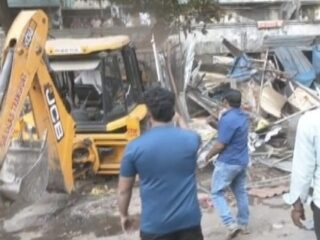
The Chief Minister wanted to be seen taking strict action against this violence, made Fahim Khan out to be the “mastermind” of this communal riot. Fahim Khan’s house was demolished. The demolitions come on the heels of the statement of Maharashtra Chief Minister Devendra Fadnavis. “In Maharashtra, we take action our own way. Where a bulldozer is needed, it will be used. Any wrongdoing will be crushed, and no one will be spared. Whatever damage has happened will be recovered from the rioters. If they do not pay the money, their property will be sold to recover the damages. Wherever required, bulldozers will also be used,” said Fadnavis (Maitra, 2025).
Fahim Khan had given an interview in the media pointing out at the lack of appropriate action by the police after he tried to file a complaint against the miscreants who desecrated the holy chadar. His role was blown out of proportion subsequently and he was made the scapegoat.
His house, owned legally by his mother was demolished by the municipal authorities for his alleged role in the communal riots. Fahim Khan was contacted by some Muslims on the morning of 17th March informing about the desecration of the holy Chadar. He reluctantly went to the protest site at around 2.15 pm after receiving repeated calls with 4 to 5 other party workers. Instead of acting against those who desecrated the holy chadar, the police were lathi charging Muslim school children. He then went to the Ganesh Peth Police Station. His statement was taken after making him wait for a longtime. However, the FIR didn’t state the events the way they unfolded. The police didn’t include any stringent charges against those present in the protest in Mahal area who desecrated the holy chadar.
After filing the complaint, Khan gave an interview to the media blaming the police for inadequate action and left for home at around 4.30pm. He was called again in the night at the Yashodhara nagar police station where he went at 10pm. He was accused there for inciting violence by giving a provocative interview to the media. He was beaten up severely along with others who were arrested.
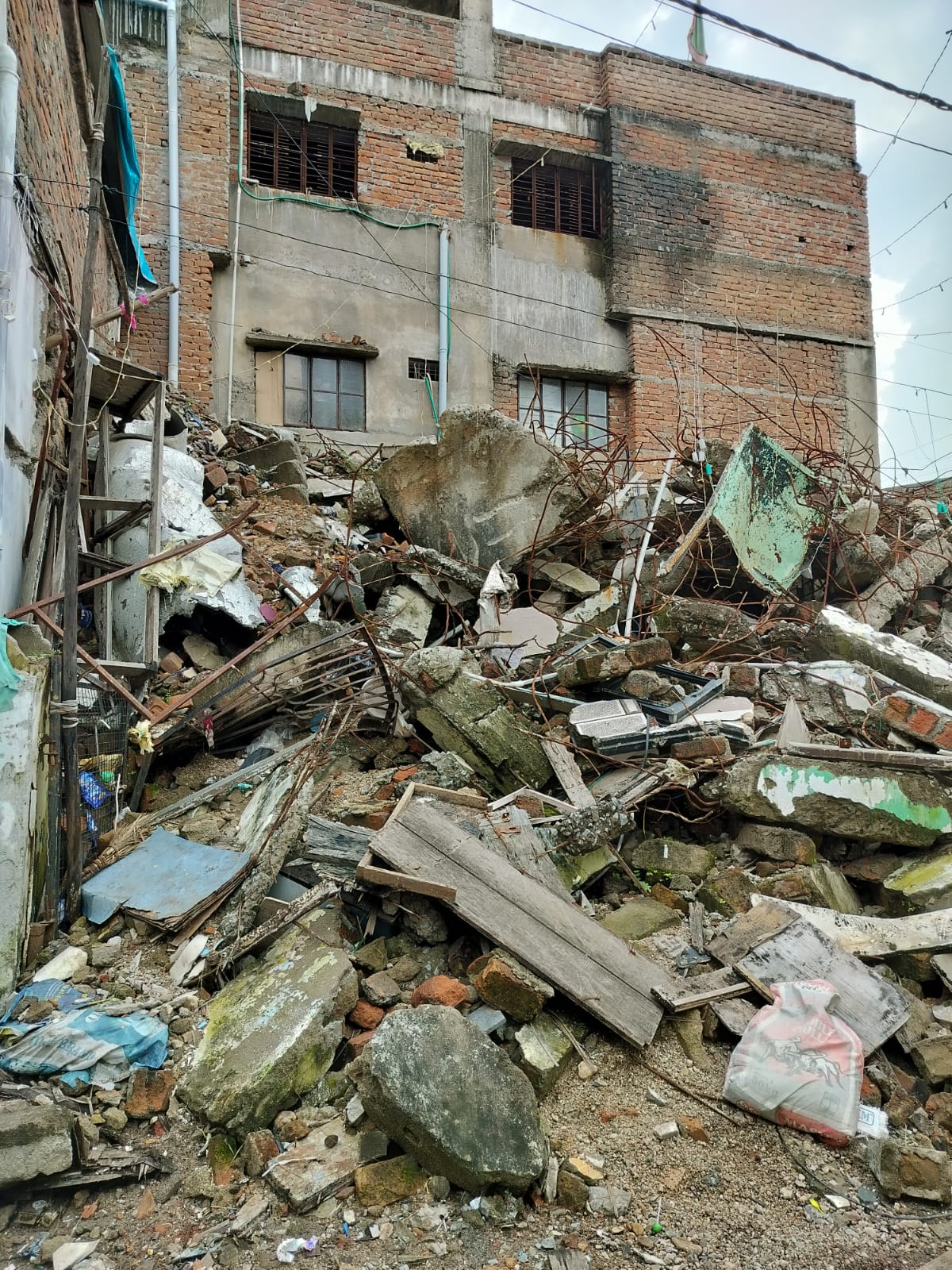
On Sunday, 23rd March, 2025, his family was served a notice for demolition of their house which the administration claimed was illegally constructed. The Nagpur Municipal Corporation issued a notice to Khan, citing various lapses in the construction of the house and lack of approval for the building plan. However, the house was registered under Khan’s mother’s name. They resided in this house for the past 30 years. His house was demolished on Monday morning, 24th March, 2025 at 9am. The whole house was razed down in a matter of minutes. Fahim Khan approached the judiciary the same morning. The Bombay High Court even issued a stay order on the demolition but this only intensified the demolition drive. The family lost their savings and house in a flash. The HC made adverse remarks on the manner the demolition took place without giving the family an opportunity of hearing. “The action was taken in a high-handed manner, without giving a hearing to the owners of the property, the bench noted,” the bench said (Bose, 2025).
Fahim Khan spent four months in prison. There are six cases in four different police stations slapped against him. He must report to the police 20 days in the month. During festivals, he gets externment (tadipar) notice and must go out of Nagpur. With these conditions he is unable to concentrate on his livelihood and the family has little income. Fahim Khan has a small shop selling burqas. He had taken a loan to stock up his shop and was counting on the month of Ramadan and Eid in March to make profits to sustain his family for the rest of the year. But he spent this time in jail. These hardships have broken the morale of the family. They are currently living in the house of Fahim’s sister.
The house of another accused, Yusuf Sheikh, was partially demolished. The demolitions which drew ire from the judiciary indicates how the state is targeting the Muslims through state structures and mechanisms.
The FIR filed in relation to the communal riots by the police has different facts than those that the fact-finding team came to gather during its trip to Nagpur. The FIR squarely blamed the Muslims and alleged that these riots were pre-planned. However, the team found the allegations exaggerated, unfounded and improbable. The Team found that FIR appeared one-sided without taking into account the provocation of the Hindu right wing organizations or role of the mob that consisted of them. The context and relevant circumstances were missing from the FIR.
CSSS team studied the FIR that is filed at the Ganesh Peth police station by police personnel dated 18th March, 2025. The FIR was written a day later- possibly and it appears to suit the narrative of the police which blamed the Muslims for this communal riot in the FIR. The FIR alleged that this riot was pre-planned by the Muslim community. Ironically the FIR doesn’t mention any happenings of the morning where the police were approached by the Muslims to stop the desecration of the holy chadar.
The FIR begins with the events at 4pm on 17th March and states that the Muslim mob of 500 to 600 gathered near the Shivaji statue and adjoining areas. The FIR states that Muslims had planned the attack on the police and were raising any anti-Hindu slogans which were abusive in nature. The FIR alleges that Muslims were carrying dangerous weapons including axes, sticks and stones. It also alleged that petrol bomb thrown at police and the mob molested a woman police personnel member. It alleged that Muslims burnt vehicles and houses of people. The team found that no houses were attacked or vandalized or burnt. No surprise that all the accused named in the FIR were Muslims
- Polarization in the Society of Nagpur:
Prior to the events of March 17, 2025, the city of Nagpur had not experienced communal violence or inter-religious tensions of significant magnitude. Historically, Nagpur has been characterized by a relatively harmonious coexistence between its Hindu and Muslim communities. While incidents of communal unrest had occasionally occurred in surrounding regions, the social environment within Nagpur itself largely remained peaceful and unaffected.
The fact-finding team observed that, despite the communal disturbances that took place in Nagpur and the subsequent one-sided media portrayal emphasizing alleged aggression by members of the Muslim community, there was no substantial evidence of enduring distrust or animosity between the Hindu and Muslim populations. Hindu residents, including shopkeepers like the Kawales and owners of vehicles that were damaged or destroyed during the riots, expressed no resentment toward their Muslim counterparts. On the contrary, they emphasized the historically cooperative and amicable relations shared by both communities.
Aman Shivankar, shop owner near the Shivaji Statue expressed regret over the events of the morning of March 17, stating that the protestors should not have disrespected the holy chadar and that the police ought to have intervened promptly to prevent actions that could offend the religious sentiments of the Muslim community. The failure at polarization can also be attributed to the perception amongst the Hindu residents in Nagpur who don’t see the Muslims as aggressors but as innocent citizens.
In conclusion, while the communal violence in Nagpur generated a polarized narrative in certain sections of the media, it did not translate into a lasting polarization of society along religious lines. The social cohesion and inter-community trust in Nagpur remained largely intact, indicating a resilience of the city’s pluralistic social fabric.
Conclusions of the Team based on observations:
The communal riot that took place in the Mahal area of Nagpur on 17th March, 2025 was as a result of the impunity granted to the Hindu right wing to disrespect the sentiments of Muslims by desecrating holy symbols. The police which could have prevented this riot by taking timely action against those who desecrated the holy chadar with qur’anic verses on it. Though this was denied by the Chief Minister, the fact-finding team verified this from different eye witnesses and videos of the incident. The police chose to be mere bystanders and allowed the Hindu right wing protestors to continue their disrespect and provocation. It refused to arrest the guilty and registered the FIR only after pressure was mounted on it.
The inaction of the police led to frustration amongst the Muslims and when even on the evening of 17th March, the miscreants who desecrated the chadar were not arrested, a section of the Muslims onlooker at the Shivaji Statue chowk approached the police again to demand arrests. The police used force to disperse only the Muslim mob while not acting against the mob of the Hindu right wing. The ensuing riot saw vandalizing of vehicles, injuries to police personnel and the death of Irfan Ansari. It is to be noted that the loss was much lesser than that reported by the media. The duration of the riot too was only the evening of 17th March as opposed to the impression given in media reports that the riot went on for a few days.
The state action after the riot didn’t seem to ensure justice but to target the Muslim community. The team gathered from their visit that innocent Muslims unconnected to the riot were arrested by the police. They were beaten up causing serious injuries which were also taken note of by the judiciary when the accused were produced in court. Almost all the accused were Muslims, including in the case of the murder of Irfan Ansari where the accused were all Muslims barring Gaur who is a senior citizen and a cancer patient- making him improbable to commit this crime and making it easier for him to get a bail. The ruling dispensation through its narrative and keeping in with its political agenda created a “mastermind” for this riot. Fahim Khan who was termed as a “mastermind” of this riot is a member of the MDP Party holding next to no clout or influence. He has a small business and went to the police station to demand filing of the FIR against those who desecrated the chadar and their arrest. This act of demanding accountability costed him his liberty. His house, legally owned by his mother, was demolished and he is implicated in the labyrinth of legal processes. The Hindu right wing leaders who were accused of desecration were never arrested. They surrendered themselves almost after two weeks of the violence and were granted bail in a matter of a couple of hours.
This communal riot in Nagpur though didn’t cause communal polarization, is nonetheless a blot on the harmonious social fabric of Nagpur which is characterized by composite culture and progressive social reforms. This riot indicates the effect of the macro Hindu ring wing politics which has come to haunt the more peaceful spaces in India through divisive narratives and politics which target vulnerable communities. The media too played a pivotal role in misrepresenting the communal riot and reported it in a lopsided manner which vilified the Muslim community in Nagpur. The media reported the state narrative without verifying it impartially, allowing this communal riot to be shrouded in lies and manipulation.
Demands/ Recommendations of the Fact-Finding team:
- The death of Irfan Ansari should be investigated impartially and those responsible for his murder should be arrested. Gaur appears to be the scapegoat to balance out the arrests. He was murdered by the mob and the culprits should be named, investigated and brought to justice.
- Stringent penal action should be taken against those who desecrated the Holy Chadar during the protests on 17th March, 2025.
- Adequate compensation should be to the families of Fahim Khan and Yusuf Sheikh for demolishing their houses without due procedure.
- Fair investigation and punitive action against police personnel who couldn’t prevent the communal riots when it was possible.
[1] https://www.opindia.com/2020/08/nagpur-riots-1923-played-in-dr-k-b-hedgewar-life-formation-of-rss/